Privacy in 2026: Stronger Signals, Sharper Rules, Less Room for Error
Jamie Vinkle
Privacy & Compliance
January 28, 2026

New laws. Stronger signals. Less ambiguity.
Privacy regulation isn’t slowing down. It’s getting more specific.
Over the past year, we’ve seen a clear shift: regulators aren’t just setting principles anymore. They’re starting to describe how they expect those principles to show up in real implementations.
New laws are coming online. Existing laws are being refined.And machine-readable signals are moving from “nice to have” to “expected.”
Here’s what’s changing, and why it matters.
India’s DPDPA is coming online

India’s Digital Personal Data Protection Act (DPDPA) is moving from paper to practice.
At a high level, DPDPA looks familiar:
- Purpose limitation
- Data minimization
- User rights around access and deletion
- Consent as the default lawful basis, with limited exceptions
If you’re operating under GDPR or CCPA/CPRA, the concepts won’t feel new.
Where DPDPA stands out:
- A strong emphasis on explicit consent
- Clear obligations around data fiduciaries (controllers) and processors
- Heavy penalties tied to failures in consent handling and safeguards
The takeaway:
Another major market is aligning with the global privacy baseline. If your compliance strategy already works for GDPR and U.S. state laws, DPDPA is an extension — not a reinvention.
GPC and machine signals are getting clearer expectations

Global Privacy Control (GPC) is no longer treated as theoretical.
Regulators are becoming far more prescriptive about what they expect when a machine-readable privacy signal is present.
What’s changing:
- Signals like GPC are increasingly treated as binding user intent
- Businesses are expected to detect, interpret, and honor them consistently
- “We didn’t see it” or “it didn’t map cleanly to our systems” is becoming a weaker defense
What this suggests next:
- A push toward greater transparency
- Clearer disclosures about how signals are interpreted
- Fewer assumptions that banners alone are sufficient evidence
The direction is obvious: if a user expresses a preference through their browser or device, regulators expect it to travel downstream.
GDPR is entering its first major refinement phase
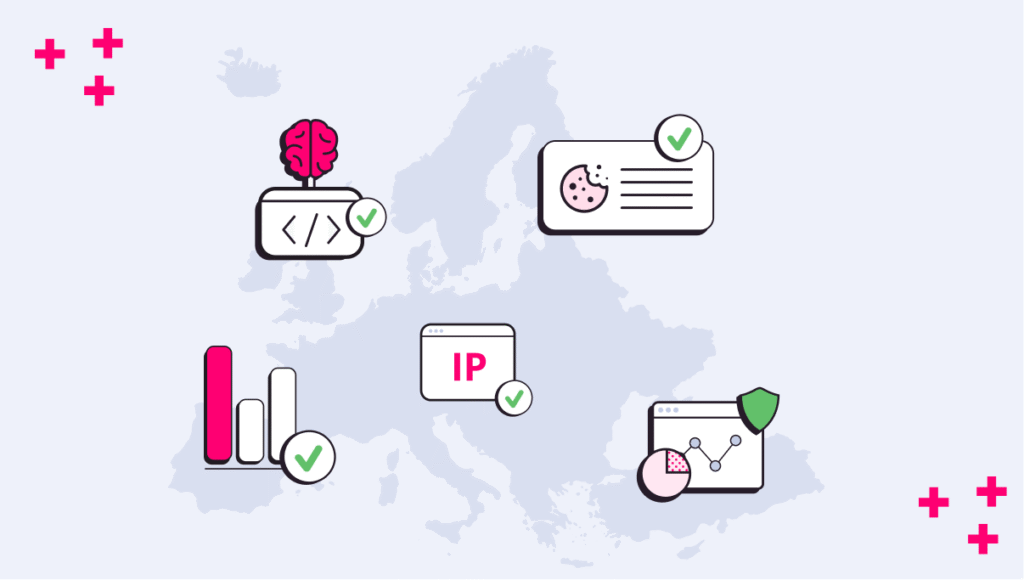
The EU isn’t replacing GDPR. It’s tuning it.
Recent proposals and guidance point to a deeper understanding of how modern tracking, analytics, and machine-driven systems actually work.
Analytics exemption (proposed)
One notable proposal would exempt non-intrusive, first-party audience measurement cookies from consent requirements if:
- They are strictly for the controller’s own use
- They are not shared or repurposed
- They do not materially impact user privacy
This reflects a practical reality: not all analytics function the same way.
A more contextual view of “personal data”
Another significant shift is the idea of subjective identifiability.
In simple terms:
- If you cannot identify a user
- And you have no legal means to do so
- The data may be considered anonymous for you, even if someone else could identify it
That’s a meaningful clarification for modern data pipelines.
IP-only tracking under scrutiny
Using IP addresses alone for tracking and classification is being examined more closely, especially in consent-mode scenarios. Assumptions that IP-only equals low risk are no longer holding up without context.
AI training and automated classification
New guidance is emerging around AI and machine learning:
- Training models may rely on legitimate interest, provided an opt-out exists
- If AI is used to classify users (intent, risk, behavior), organizations must be able to explain the logic
In other words: If you label someone “high intent” or “high risk,” you should be able to explain why.
U.S. state privacy laws continue to expand in 2025
There’s still no federal law.
But the state-by-state map is filling in fast.
What’s notable in 2025 isn’t just more laws — it’s convergence around key mechanisms.
Universal Opt-Out Mechanisms (UOOM / GPC)
Many new and existing state laws explicitly recognize universal opt-out signals.
Key dates to know:
- Delaware
- Law effective: Jan 1, 2025
- UOOM enforcement: 2026
- New Hampshire
- Effective: Jan 1, 2025
- New Jersey
- Law effective: Jan 15, 2025
- UOOM enforcement: July 15, 2025
- Minnesota
- Effective: July 31, 2025
- Maryland
- Effective: Oct 1, 2025
- Includes UOOM enforcement
- Explicit bans on dark patterns in cookie banners
- Connecticut
- Right-to-cure ends in 2025
- Enforcement now assumes your “Do Not Sell” and deletion mechanisms actually work
Across states, the pattern is clear: Mechanisms matter more than policy language.
The bigger picture
A few themes are now hard to ignore.
GPC and machine signals are here to stay
They’re no longer edge cases. They’re becoming table stakes.
The EU is refining GDPR, not retreating from it
With more nuanced guidance that reflects how tracking, analytics, and AI are actually used.
Major global markets are aligning on digital privacy
India, Europe, and U.S. states are converging on similar expectations, even if the details differ.
The U.S. remains fragmented
But common threads are emerging, with sharper rules around specific data types and practices (geofencing, biometrics, dark patterns).
The direction of travel is consistent: Less ambiguity. More accountability. Stronger signals.
And far less room for “we didn’t know.”
You’re no longer just being judged on what your policy says. You’re being judged on what your systems actually do.
As privacy signals become machine-readable, enforcement becomes more technical, and regulators align on expectations, the margin for interpretation keeps shrinking. Teams that treat privacy as documentation will keep falling behind. Teams that build it into their operations will stay ahead.
If you want to understand how your current stack handles consent, signals, and enforcement — and where your real risk sits — now is the time to look under the hood.
Book a walkthrough with CHEQ and see how modern privacy operations are actually being built for this next phase.
The CHEQ-Up Vol. 6 | From Policy to Practice
Privacy regulation isn’t slowing down. It’s getting more specific.
In this episode, Jamie Vinkle and Jason Patel talk through a few key shifts shaping privacy in 2026, including India’s DPDPA coming online, ongoing GDPR refinements, and the growing expectation to honor machine-readable opt-out signals like Global Privacy Control.
The conversation focuses on how these changes show up in practice, from analytics and IP tracking to AI-driven data classification, and why regulators’ increasing technical fluency is raising the bar for real-world compliance.