Agent Trust vs. Agent Intent: Why Verifying AI Agents Is Only the Start
Jamie Vinkle
Bot & AI Agent Trust Management
June 25, 2026
-
Agent trust confirms whether an automated visitor is what it claims to be. Agent intent evaluates what it is likely trying to do.
-
Forrester has started framing this market as bot and agent trust management, reflecting the shift from traditional bot detection toward identity, trust, and control for automated traffic.
-
A legitimate, correctly identified agent can still behave in ways a site does not want to allow. Identity is necessary, but it is not sufficient.
-
Intent is a likelihood-based inference drawn from behavior across a session, not certainty about what any single agent will do.
-
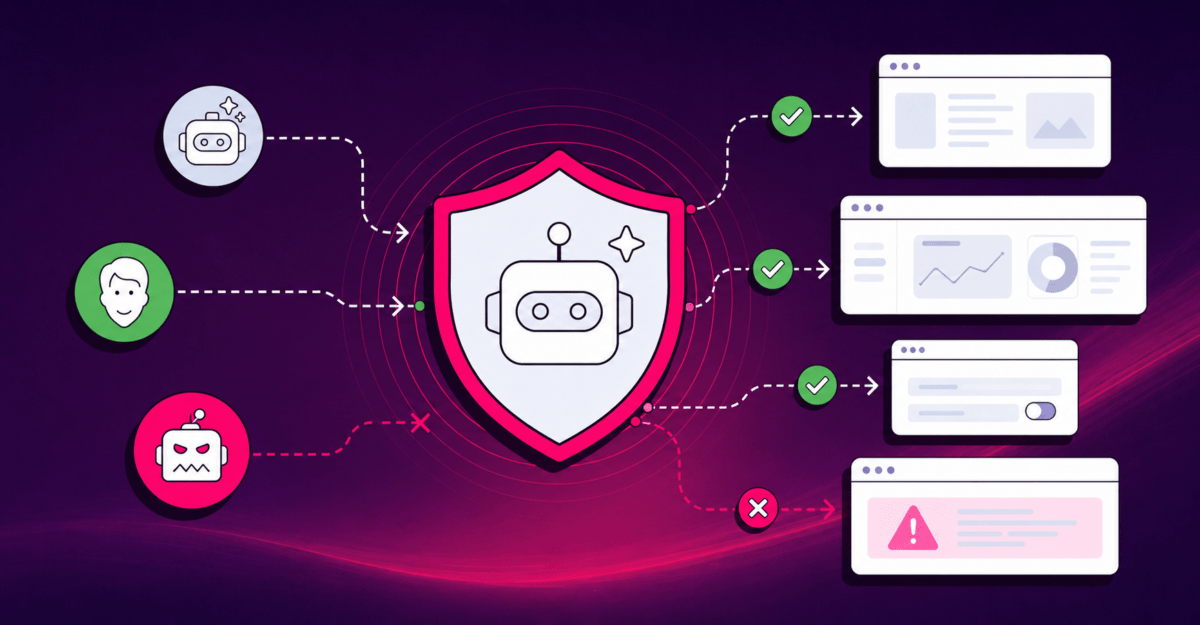
Binary block-or-allow decisions are giving way to a broader response spectrum: allow, monitor, step-up, constrain, throttle, misdirect, or block.
-
CHEQ Agent Intent is built around this distinction: entity, identity, intent, and control, with the customer deciding the proportional response.
As AI agents become real website traffic, a new category of tooling is forming around how organizations identify, verify, and govern automated visitors.
Verifying an AI agent confirms who it is. It does not determine whether its current behavior should be allowed, limited, challenged, or blocked.
That distinction is the difference between agent trust and agent intent. Trust establishes whether an agent’s identity can be accepted. Intent evaluates what that agent appears to be doing once it is on the site.
This post explains where agent trust is useful, where it stops, and why intent is becoming the more practical layer for organizations that need to govern AI agent behavior in real time.
What Is Agent Trust Management?
Agent trust management is the practice of deciding which automated agents to allow onto a site, and on what terms.
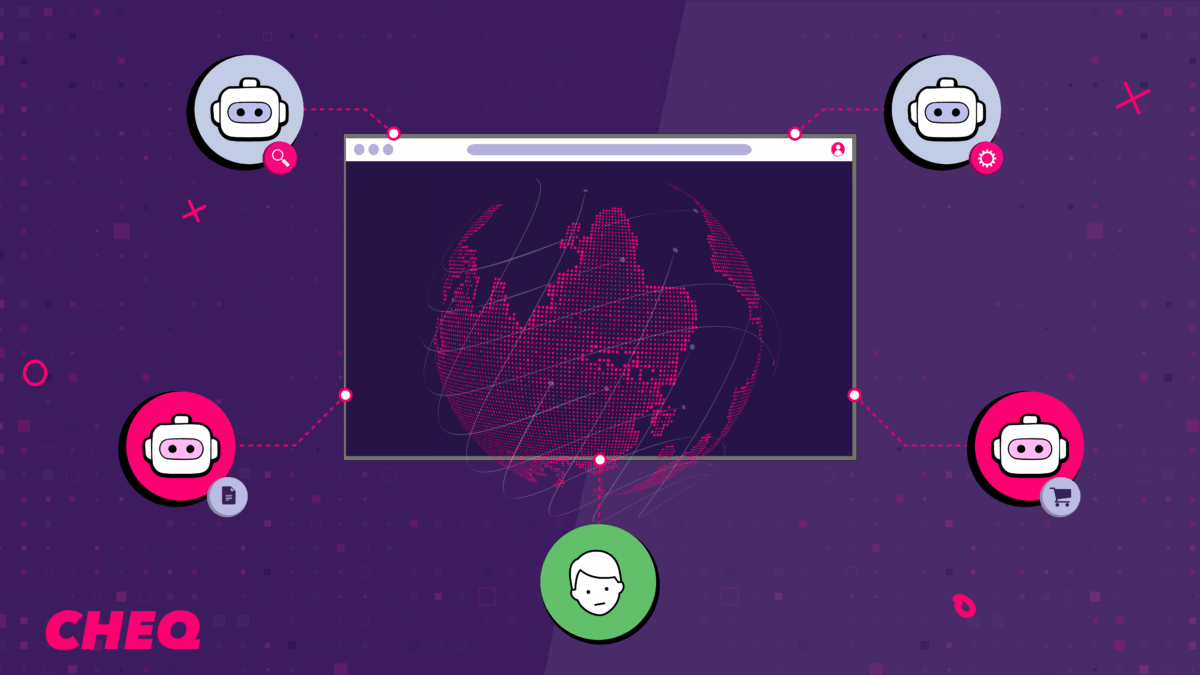
It covers the full population of automated visitors an organization now has to reason about: search crawlers, monitoring bots, authorized AI agents acting on a user’s behalf, and adversarial traffic that has no legitimate reason to be there.
Forrester has started framing this market as bot and agent trust management, and that is the category lens used here.
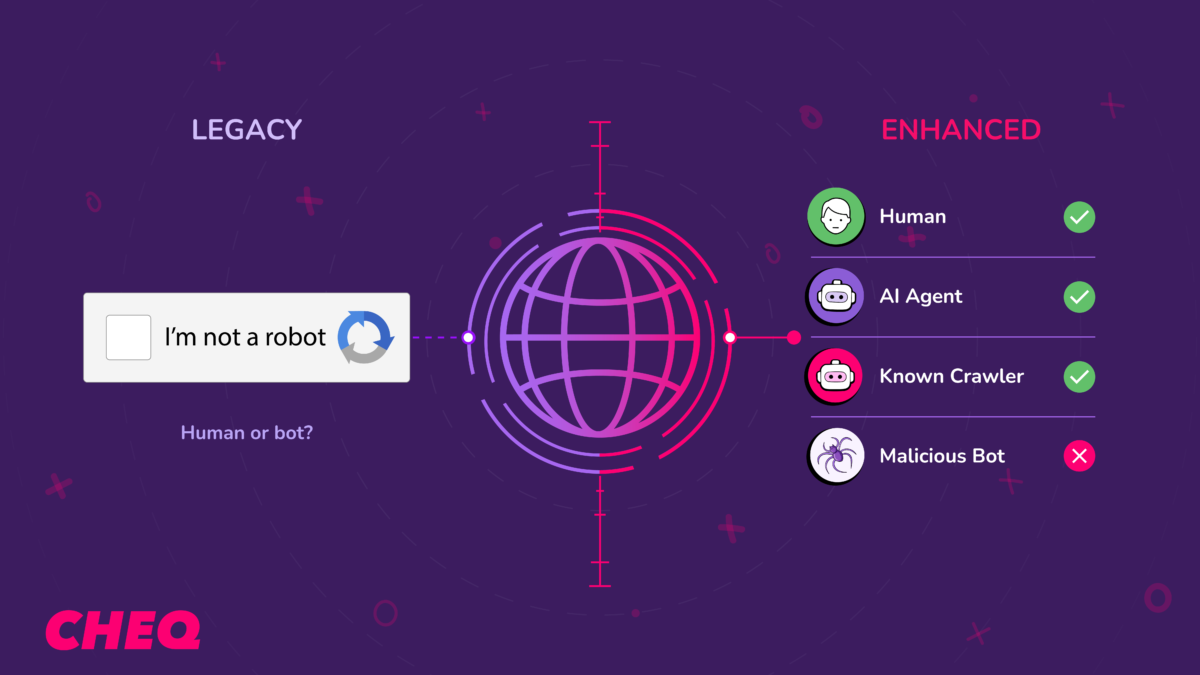
The category is forming because AI agents no longer fit cleanly into the traditional human-or-bot split. A shopping assistant that compares prices, an autonomous agent that fills out a form, or a research tool that reads multiple pages before generating an answer may all be automated visitors. Some may be authorized. Some may be unwanted. Some may be legitimate in one context and problematic in another.
The older binary question, “is this a bot or not,” is no longer enough. Organizations now need to identify what is reaching the site, verify whether the agent can be trusted, and decide what that agent should be allowed to do once it is there.
Trust is the first part of that decision. It is not the full decision.
What Agent Trust Verifies, and Where It Stops
Trust, in this context, means confirming that an agent is what it claims to be.
That can include its provenance, the operator behind it, and whether the identity it presents matches reality. Establishing this is valuable work, and it is the right first question for any organization to ask about automated traffic reaching its site.
The limitation is that trust verifies identity. It does not evaluate the behavior happening in a specific visit.
A shopping agent shows where this gap opens up. The agent may be legitimate, correctly identified, and operating on behalf of a real user. That confirms the agent’s identity. It does not tell the site whether the agent is comparing a few products for an active shopper, scraping every product page across a catalog, or attempting an automated transaction that violates the site’s policy.
Those are different situations, but they can all start with the same trust verdict.
Sites that want to enable and govern AI agent interactions on retail sites run into this distinction directly. A verified agent can still require different treatment depending on what it is doing in the moment.
Why Verifying an Agent Is Only the Baseline
Two agents can both pass every available trust check and still require different responses.
A verified research agent reading documentation at a normal pace may be acceptable. The same type of agent crawling thousands of pages to extract content for a dataset may need to be throttled, constrained, or blocked.
A verified shopping assistant comparing a small set of products for a user may be useful. The same class of agent extracting pricing across an entire catalog may create business risk.
A verified assistant submitting a form on behalf of a user may be allowed. An agent creating accounts, testing coupon fields, or attempting automated checkout may require step-up verification or stricter controls.
In each case, the identity question has already been answered. The remaining question is behavioral: what is this agent likely trying to do, and what response fits that behavior?
An organization that stops at trust generally ends up in one of two places. It either lets verified agents continue without enough behavioral control, or it falls back on broad blocking because it does not have a more precise way to respond.
Neither approach fits the reality most sites now face, where the same legitimate agent can be acceptable in one moment and unwanted in another.
What Reading an Agent’s Intent Adds
Intent, in this context, does not mean certainty about an agent’s internal goal. It means a likelihood-based read of what an agent appears to be trying to do, inferred from its behavior across a session.
That read can include how the agent arrived, what it touches, the pace and pattern of its actions, whether it behaves consistently with its verified identity, and whether its behavior changes as the session continues.
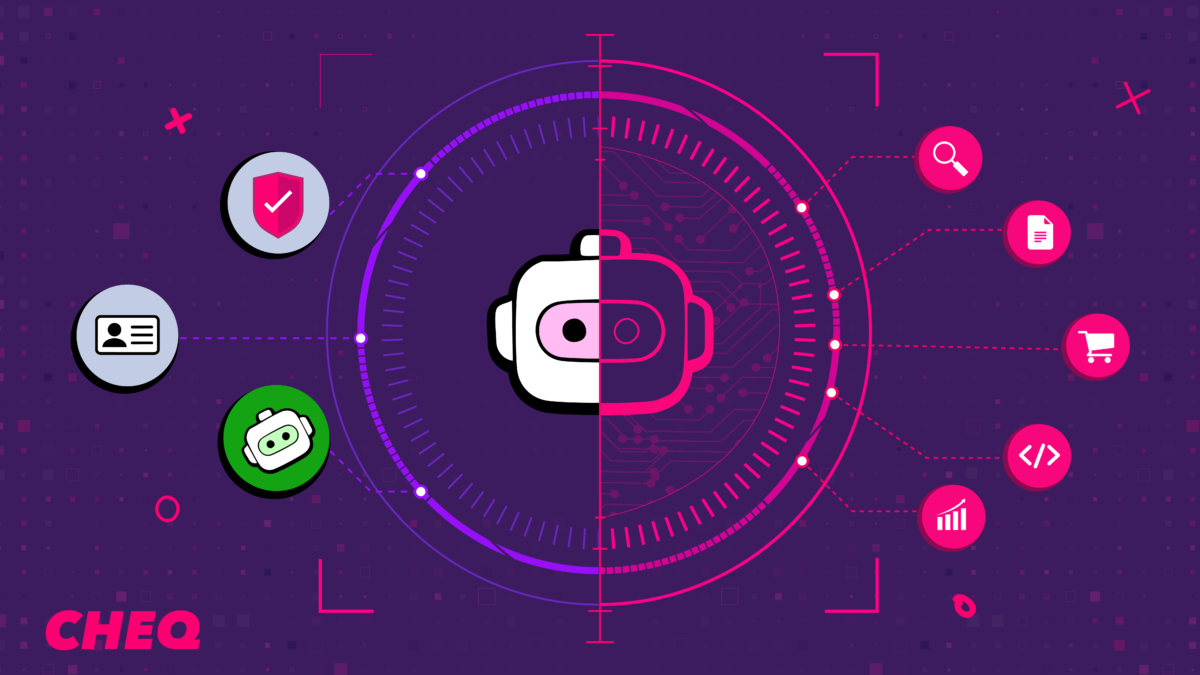
The fuller model answers four questions in sequence:
- Entity: what is it
- Identity: whose is it
- Intent: what does its behavior suggest
- Control: what response is appropriate
Identity is usually established at a point in time. Intent has to be read continuously because behavior can change from one request to the next, even when the agent’s identity does not change.
This is why trust and intent are stronger together than either is alone. A site needs to know whether an agent is legitimate, but it also needs to know whether the agent’s current behavior fits the site’s policy.
None of this works without visibility across the journey. A site that can only manage handoffs between humans and AI agents at one point in the session loses the behavioral thread that intent depends on when a human hands a task to an agent, or an agent hands a completed task back to a human.
Intent reads across that whole arc, not only at the entry point.
From Binary Blocking to Proportional Governance
Once intent can be read, a single block-or-allow switch stops being the only available response.
Responses become a spectrum, matched to what the intent read supports:
- Allow agents whose trust and intent both check out.
- Monitor borderline activity while more signal accumulates.
- Step-up verification when more confidence is needed before allowing the next action.
- Constrain what an agent is permitted to do, such as read but not write, or browse but not transact.
- Throttle aggressive activity that is not clearly malicious but creates load, risk, or policy concerns.
- Misdirect an agent suspected of adversarial intent toward a controlled environment instead of the live site.
- Block agents where confidence is high and the policy response is clear.
Binary blocking either over-blocks, cutting off authorized and useful agents along with genuinely unwanted traffic, or under-blocks, allowing behavior that should have been limited because the system has no response between allow and deny.
A response spectrum gives the organization more control. It can slow, limit, challenge, redirect, or block an agent based on what the behavior supports, rather than treating every verified agent the same way.
For example, two agents may both pass a trust check. One browses normally and is allowed without friction. The other makes requests at a pace no normal use case would justify, so the site throttles it while more signal accumulates. Both started from the same trust verdict. The difference is the read of intent.
That level of precision is what it takes to govern AI agent behavior once agents become a meaningful share of site traffic rather than an edge case.
How CHEQ Approaches Agent Intent
CHEQ Agent Intent is the offering built on that exact distinction. It’s organized around four pillars that answer, in order, what a visitor is, whose identity it presents, what its behavior suggests it intends, and what response fits.
The approach draws on CHEQ’s identity and signals network, spanning roughly six trillion signals daily across more than 300,000 customer-monitored sites, to build the entity and identity read that intent depends on. At that scale, the intent pillar can corroborate behavior across sites, rather than reading a single site’s traffic in isolation.
The same limits apply to CHEQ’s own tooling.
CHEQ Agent Intent surfaces signals, a classification, and a likelihood-based read of intent. The customer decides what happens next. It doesn’t claim certainty about every agent that arrives, and it doesn’t act automatically on the reader’s behalf without that decision being made.
Readers evaluating CHEQ Agent Intent for their own site can see the approach in more depth.
Final Thoughts
An automated visitor that passes every trust check has only cleared the identity question. What happens next depends on what it does once it is on the site, not only on the credential it presented at entry.
Treating identity verification as a substitute for behavioral judgment is where trust-only systems fall short. A verified agent is still just a verified agent, and verification alone cannot determine whether the right response is to allow it, throttle it, constrain it, or block it.
The organizations that handle AI agents effectively will be the ones that build for both questions: whether an agent can be trusted, and whether its behavior should be allowed.