Are Carding Bots Using Your eCommerce Site To Commit Fraud?
Oli Lynch
Cyber Risks & Threats
March 12, 2026
-
Carding is a form of fraud where bots use stolen credit or gift card details on ecommerce checkouts to test which cards are still valid, leading to chargebacks, fake orders, skewed analytics, and inventory issues.
-
Attackers typically run low-value test transactions at scale, often mimicking normal user behavior until checkout, which makes carding bots hard to distinguish from real customers using standard fraud tools.
-
You can spot carding activity through signals like spikes in failed authorizations, unusually small basket sizes, repeated visits to checkout, many cards from one IP, and frequent address mismatches.
-
Effective defenses include using AVS, CAPTCHAs (sparingly), behavior analysis, browser validation, API security, and velocity checks, plus identity-aware signals across devices, networks, and sessions to separate trusted shoppers from high-risk activity.
Carding is an increasingly problematic issue for online retailers because it exploits card-not-present flows that are designed for speed, not certainty about who is behind the transaction.
Up to $43 billion is projected to be lost to credit card fraud in 2026. And with more businesses reliant on their online platforms, criminals can often find a way to exploit shoddy security to validate their gains.
But what exactly is carding, and how does it work?
What is carding?
Carding is a type of fraud where stolen credit card or gift card details are tested on retail websites or payment portals to see which cards are still active. Fraudsters typically run many small transactions in a short period of time to validate large batches of stolen cards.
When those tests go through, the impact stacks up quickly: fraudulent purchases, skewed analytics, false leads, and inventory problems. They can also result in chargebacks, which can have an impact on a company’s reputation with a card issuer.
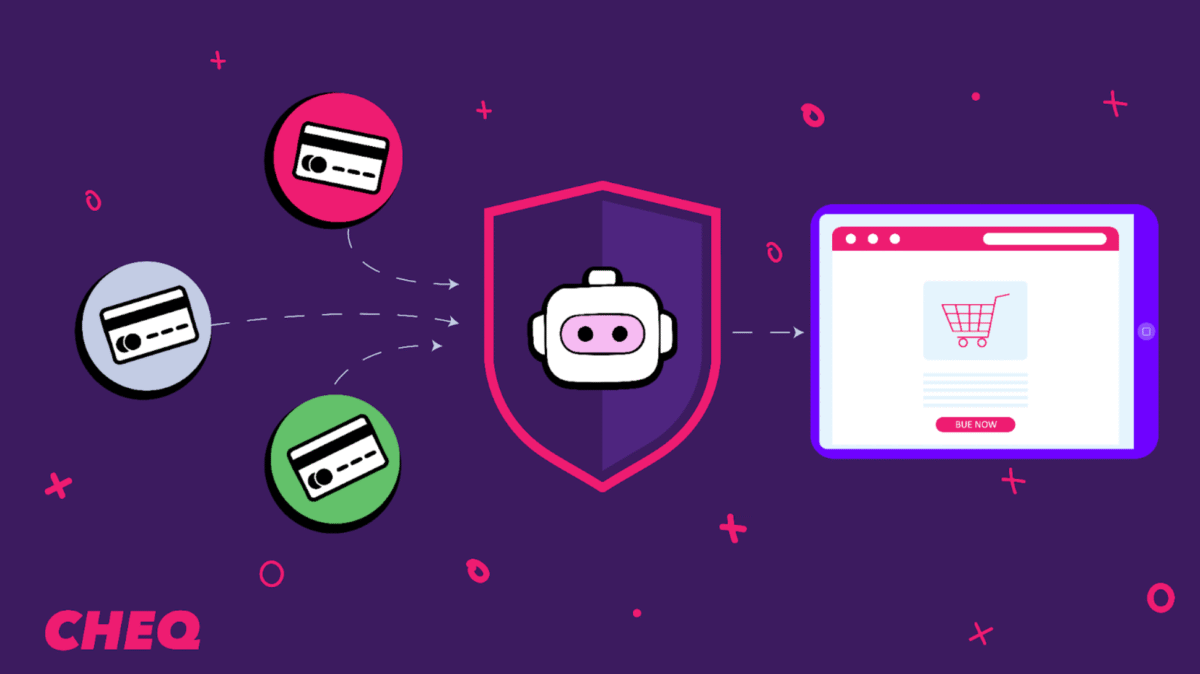
The practice is also known as credit card stuffing, a card verification attack, and carding bot attacks. Carding bots are automated scripts that input stolen card details at scale on checkout pages, doing the validation work for the criminals. Once validated, these cards can then be resold online.
If you manage a website with any form of checkout functionality, you are a potential target for carding bots, regardless of your size or industry.
How are these stolen cards obtained?
The cards used in a carding attack can be both physical cards or from stolen data. Hackers who access poorly stored data can often collect thousands or even millions of credit card details in one attack.
Of course, not all of these cards are valid, so this is where carding is useful. By using bots for carding, fraudsters can quickly understand which stolen cards are worth selling or using.
There are many forums online, usually on the Tor network, where criminals can sell and exchange stolen card details.
How does a carding attack work?
Like most fraud carried out using malicious bots, carding is fast, automated, and highly scalable.
It often starts by looking exactly like a normal shopping session. An account may be registered if required, and a few items may be added to a shopping basket. By mimicking genuine user behavior, the bot can perform the duty that it is programmed to do.
The handoff happens at checkout. This is where the bot takes over and begins cycling through multiple stolen credit or debit cards to see which ones work.
To avoid drawing attention, the bot typically runs low-value transactions, often just a few dollars. Once a small transaction is confirmed, the card is flagged as “live” and can then be used for more high-value or high-risk purchases.
If you are not monitoring behavior at the transaction level, you only see “failed payments” and the occasional small successful order, which is why carding can quietly drain revenue, pollute analytics, and warm up cards for much bigger fraud down the line.
How to spot a carding attack
Like most bot activity, there are often several signals that suggest something is amiss.
By keeping an eye out for these signs, you can tell if your site might have been a victim of a carding attack:
- A high volume of failed payment authorizations
- Smaller average basket size
- A spike in the number of abandoned shopping carts
- The same user IP causing a large number of failed payment authorizations
- Multiple visits to the same checkout page in relation to site visits
- Cards with different addresses being used or cards rejected due to address mismatch
Although the carding bot might exhibit what seems like genuine user behavior, to a point, it’s at the checkout where the truth comes out.
These bots might also be cyborgs. This means a human user operates them until the checkout step, when the fraudster just runs the bot code.
Of course, this is where it’s too late for many bot prevention platforms. The damage is done, and you’re left with fraudulent orders, countless chargebacks, or an analytics dashboard that is a mess.
So what can you do?
Why identity intelligence matters for stopping carding bots
Carding is no longer just about a card number and a checkout page. It is about who is behind the transaction, and whether that “shopper” looks like a real, consistent customer across time, devices, and sessions.
Today’s fraudsters can assemble identity profiles from breaches, then pair stolen payment data with compromised accounts or synthetic identities to make card tests look more legitimate.
That is why traditional controls like velocity rules, AVS, and simple device checks are useful but often insufficient on their own. A carding run can be distributed across many IPs, many devices, and many “fresh” accounts, with each individual transaction kept intentionally small.
Identity intelligence adds an extra layer of protection: instead of evaluating each checkout attempt in isolation, it aggregates signals across visits and contexts to detect patterns that individual sessions do not reveal.
For example, identity-aware signals can help surface:
- Devices that show up across many unrelated accounts
- IPs and locations associated with fraud clusters
- Suspicious combinations of device, network, and behavior that do match normal shoppers (even if the cart and transaction size look ordinary)
The goal: apply more scrutiny to high-risk or inconsistent identities, while letting known, trusted users move through with less friction.
Preventing carding bot attacks
There are a number of ways a site owner can prevent this kind of bot attack.
How CAPTCHAs Help Slow Down Carding Bots
One of the original ways of preventing bots from clicking on your website, Captcha, is still effective. However, it can be off-putting for genuine customers who are used to one-click checkout.
How Address Verification (AVS) Disrupts Carding Attempts
The Address Verification System (AVS) helps to match the card user’s address with the account or delivery address. Because carding bots will often be trying to verify multiple cards from different people, it’s very likely that the addresses won’t match.
How Behavior Analysis Detects Automated Carding Activity
Using an external fraud solution that analyses genuine user behavior is a good way to block carding bots. This form of fraud prevention uses machine learning to spot signs of bot behavior and block activity in real-time.
Behavior analysis is also stronger when it includes identity-level signals such as device fingerprinting, network reputation, and historical behavior across sessions, not just what happens in a single visit.
How Browser Validation Identifies Automated Carding Sessions
Many bots operate from within their own window. This means that they may need to pretend they are using a specific browser, such as Chrome, to be able to access your site. Browser validation software can check to see if the user is really using the browser they say they are and eliminate these types of fraud bots.
How API Security Defends Against Brute-Force Carding
Most sites with integrated payment often have API certificates to validate payment information. This is vulnerable to brute force attacks from carding bots, so e-commerce sites use Transport Layer Security (TLS) and other authorization mechanisms to check transactions.
Identity-aware monitoring can also help here by flagging high-risk API driven checkout patterns when the surrounding identity context does not line up, for example a brand-new identity attempting repeated payment tokenization flows across multiple devices or networks.
How Velocity Checks Limit High-Volume Card Testing
This simple fraud-checking solution helps block someone from trying to use multiple cards in a short time frame. A genuine user (e.g., a human) is unlikely to make more than a handful of transactions on any platform. You can specify the threshold for this type of transaction with your payment processor, which is one of the easiest ways to prevent carding fraud on your site.
Pairing these defenses with identity intelligence across devices, networks, and sessions makes it much harder for carding bots to hide in normal traffic.
| Prevention Method | How It Works | What It Catches |
|---|---|---|
| CAPTCHAs | Challenge at checkout that bots must solve before proceeding | Basic scripted bots running high-volume card tests |
| Address Verification (AVS) | Matches the card user’s billing address with the account or delivery address | Carding bots cycling cards from different people, causing address mismatches |
| Behavior Analysis | Machine learning spots bot behavior patterns in real time; strengthened by device fingerprinting, network reputation, and session history | Automated checkout behavior that deviates from genuine user patterns |
| Browser Validation | Checks if the session is truly using the browser it claims to use | Bots that spoof browser identity to access checkout and payment pages |
| API Security | TLS and authorization mechanisms validate payment information at the API layer; identity-aware monitoring flags high-risk API patterns | Brute-force carding attempts against payment APIs |
| Velocity Checks | Limits the number of card attempts per account or IP within a set timeframe | High-volume card testing runs that rely on rapid sequential submissions |
Bringing bot and identity protection together
Carding is a checkout abuse problem, but it rarely stays confined to checkout. The same fraud infrastructure often shows up in account creation, login, promo abuse, and other high-intent flows.
The strongest defense is layered:
- Bot detection that can identify automation and scripted behavior in traffic and checkout flows.
- Identity intelligence that can score risk and trust using signals like device, network, geo, and behavioral patterns over time.
With Deduce from CHEQ, you can block or challenge high-risk automated activity earlier, and reduce friction for known good users who have consistent, trusted signals.
Author
Oli Lynch
Since working for CHEQ, Oli has become something of a click fraud nerd, and now bores people at parties with facts about click farms and internet traffic stats. When not writing about ad fraud, he helps companies to optimise their marketing content and strategy with his own content marketing business.