AI Agents Initial Insights and Trends 2025
Amir Zachar
Threat Intelligence
January 26, 2026
Executive Summary
Scope and data context – The insights in this report are derived from analysis of observed traffic across CHEQ’s global network, which secures the go-to-market attack surface for more than 15,000 brands worldwide. CHEQ monitors web, application, and API interactions across a wide range of digital environments, supporting customers from small and mid-sized businesses to large global enterprises across industries such as ecommerce, travel, financial services, media, and technology. Findings presented here reflect aggregated, anonymized observations across this network and are intended to surface directional patterns in emerging AI agent behavior rather than client-specific activity.
AI agents emerged as a distinct and observable class of web traffic in 2025, marking a new phase in how automated systems interact with digital environments. Throughout the year, AI agent presence expanded rapidly across enterprise websites, reaching broad coverage within months. This acceleration coincided with major platform releases that made agent capabilities accessible to mainstream users, moving agents from niche experimentation into real-world deployment.
While AI agents currently still account for a small share of total traffic, their behavioral profile clearly differentiates them from traditional bots. Across session depth and duration, AI agents consistently exhibit engagement patterns that more closely resemble human users than automated scripts, particularly at higher percentiles. In parallel, early observations show agents beginning to interact with core site functionality, including internal search, structured workflows, and high-intent actions – signaling progression beyond passive content retrieval.
These trends indicate that AI agents are not simply another form of automation, but an emerging interaction layer that challenges existing assumptions about traffic classification, analysis, and control. As agent capabilities mature and autonomy increases, organizations will need visibility that extends beyond verification to continuous behavioral monitoring. The patterns observed in 2025 represent early indicators of a structural shift in how the web is accessed – and why adaptive detection and control will be essential as AI agents become a permanent part of the digital ecosystem.
Key Observations
Rapid expansion of AI agent presence:
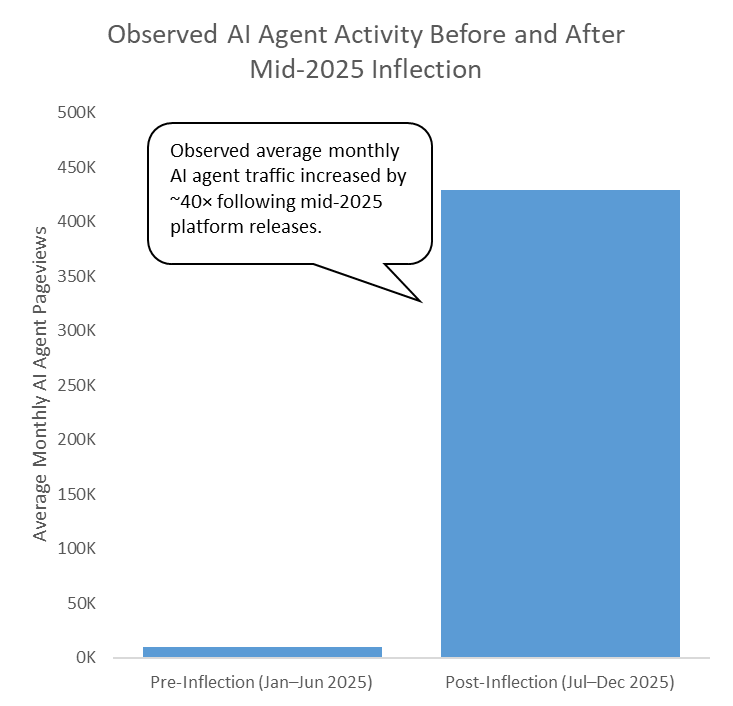
| Following mid-2025 platform releases, observed AI agent activity shifted to a materially higher baseline, with a majority of monitored enterprise environments registering agent interactions within months. |
Behavioral differentiation from traditional bots:
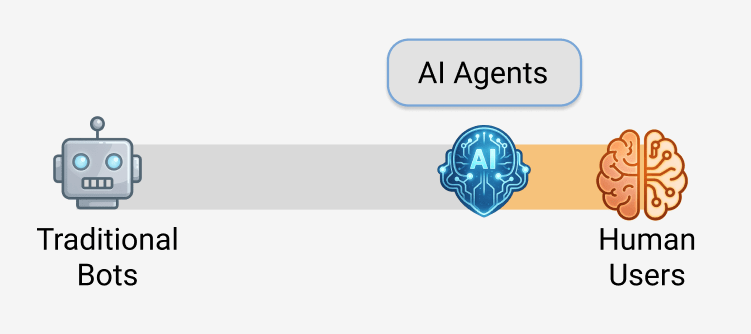
Across session depth and duration, AI agents consistently exhibit engagement patterns closer to human users than to automated scripts, particularly at higher percentiles. |
Early progression beyond passive browsing:
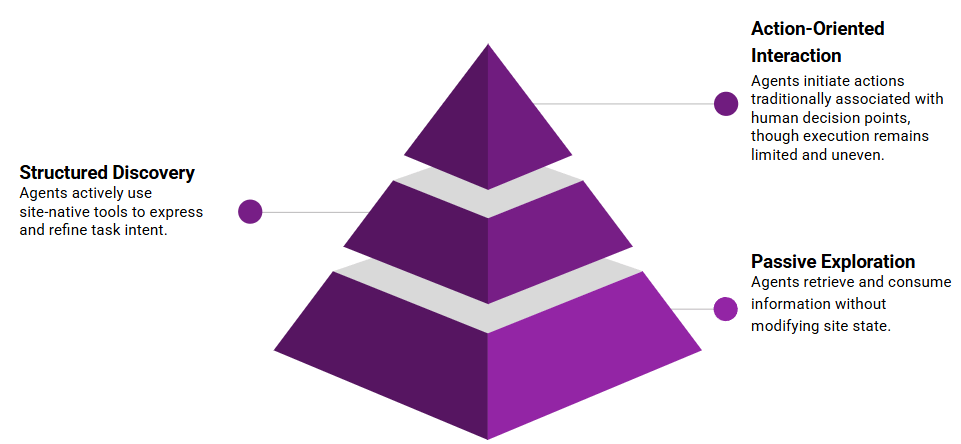
| AI agent interactions currently cluster around passive exploration, with increasing presence in structured discovery and isolated instances of action-oriented interaction, forming an early progression toward task execution. |
Trend 1 – AI Agent Activity Scaled Rapidly in 2025 and Is Entering an Early Normalization Phase
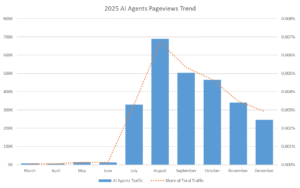
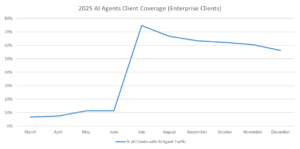
AI agent activity expanded rapidly through mid-2025, moving from initial detection to broad enterprise visibility within a matter of months. Following early signals in the first half of the year, both AI agent pageviews and enterprise client coverage rose sharply, with a pronounced inflection beginning in July 2025. Within a short period, AI agents became observable across a majority of enterprise environments, even as their overall share of traffic remained modest.
This acceleration closely aligns with a shift in market accessibility. In July 2025, OpenAI made its ChatGPT agent available to Plus subscribers, lowering the barrier from a niche, high-cost capability to a broadly accessible feature. In parallel, other vendors introduced agent functionality through native products and extensions, expanding the surface area for agent-driven interaction across the web. As a result, AI agents transitioned quickly from experimental tooling into a visible, cross-industry presence.
Following this initial surge, observed AI agent volumes stabilized, reflecting a combination of user behavior patterns and ecosystem dynamics rather than a loss of momentum. While early releases drove exploration and experimentation, general-purpose delegation to autonomous agents has not yet become habitual for most users. Many continue to favor direct, iterative interaction with AI systems, maintaining control over individual steps rather than fully delegating tasks. At the same time, the agent landscape is evolving rapidly: as new implementations and capabilities emerge, detection coverage necessarily adapts, and observable activity may temporarily shift as fingerprints and behaviors change.
Taken together, these trends indicate that AI agents have achieved broad early presence ahead of sustained, high-frequency usage. Current traffic levels are consistent with an exploratory phase in which availability and experimentation are expanding faster than entrenched user behavior. As agent capabilities mature, trust models evolve, and detection keeps pace with innovation, AI agent traffic is likely to remain episodic in the near term – while serving as an early signal of longer-term shifts in how users interact with digital environments.
Trend 2 – AI Agent Presence Varies Significantly by Industry Environment
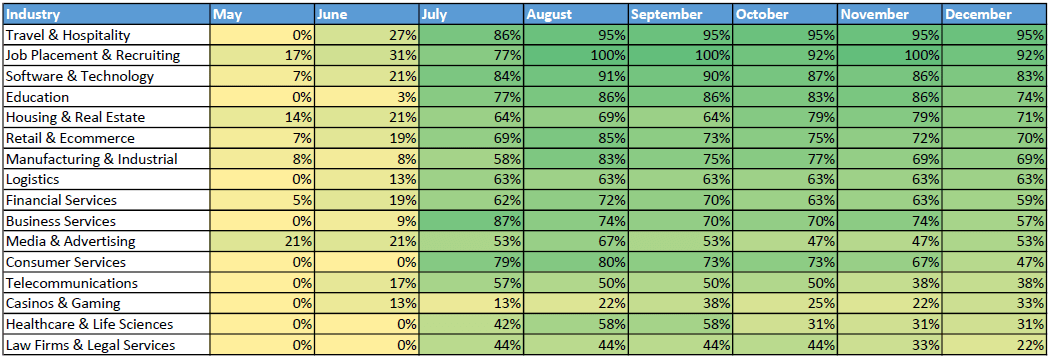
| Share of Enterprise Clients with Observable AI Agent Activity, by Industry |
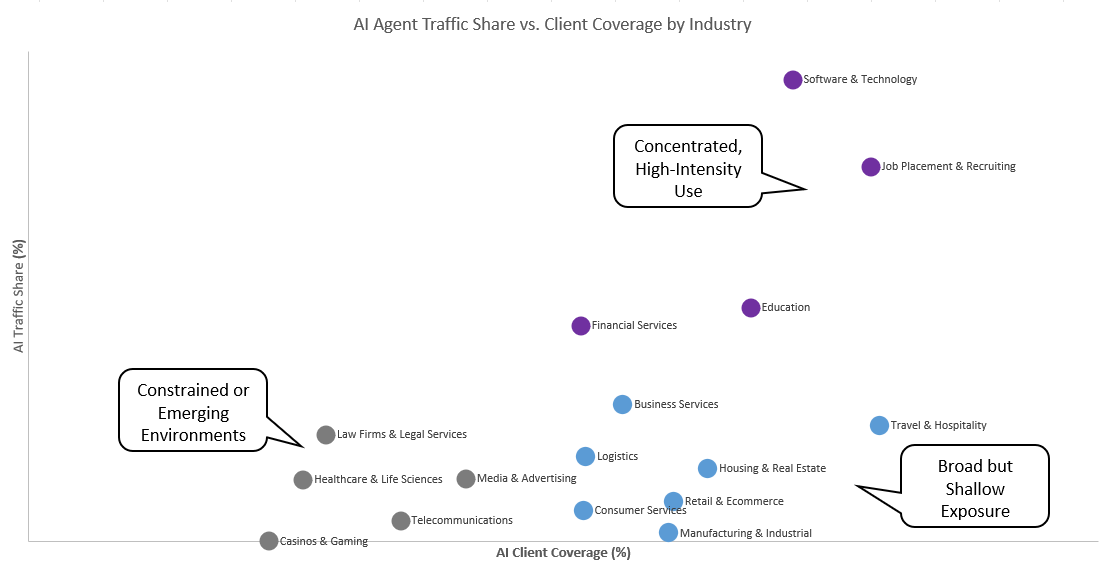
AI agent activity now clusters into three distinct industry patterns, reflecting differences in digital environment structure rather than uniform adoption. The largest group consists of industries with broad but shallow exposure, where AI agents are visible across a majority of enterprise clients but contribute only a small share of overall traffic. Travel and hospitality, retail and ecommerce, education, real estate, and consumer services fall into this category, suggesting that AI agents are being used episodically: primarily for exploration, research, or planning, without yet becoming a sustained source of interaction volume.
A second, smaller cluster shows concentrated, high-intensity use, where AI agent traffic over-indexes relative to client coverage. Software and technology, job placement and recruiting, and parts of financial services exhibit this pattern, indicating more intensive agent activity among subsets of clients. In these environments, AI agent capabilities appear more closely aligned with industry workflows, supporting deeper or more frequent use even as overall coverage remains comparable to other sectors.
The third cluster includes industries where AI agent activity remains constrained or emerging. Healthcare and life sciences, legal services, telecommunications, and gaming show both lower client coverage and minimal traffic contribution. These environments tend to be shaped by regulatory sensitivity, real-time or human-centric workflows, and higher thresholds for autonomous execution, which limit how and where agents can operate today. Taken together, these clusters underscore that industry environment, not adoption maturity, is the primary factor shaping how AI agents surface and how deeply they are used at this stage.
Trend 3 – AI Agents Exhibit Human-Like Engagement Patterns – Not Traditional Bot Behavior
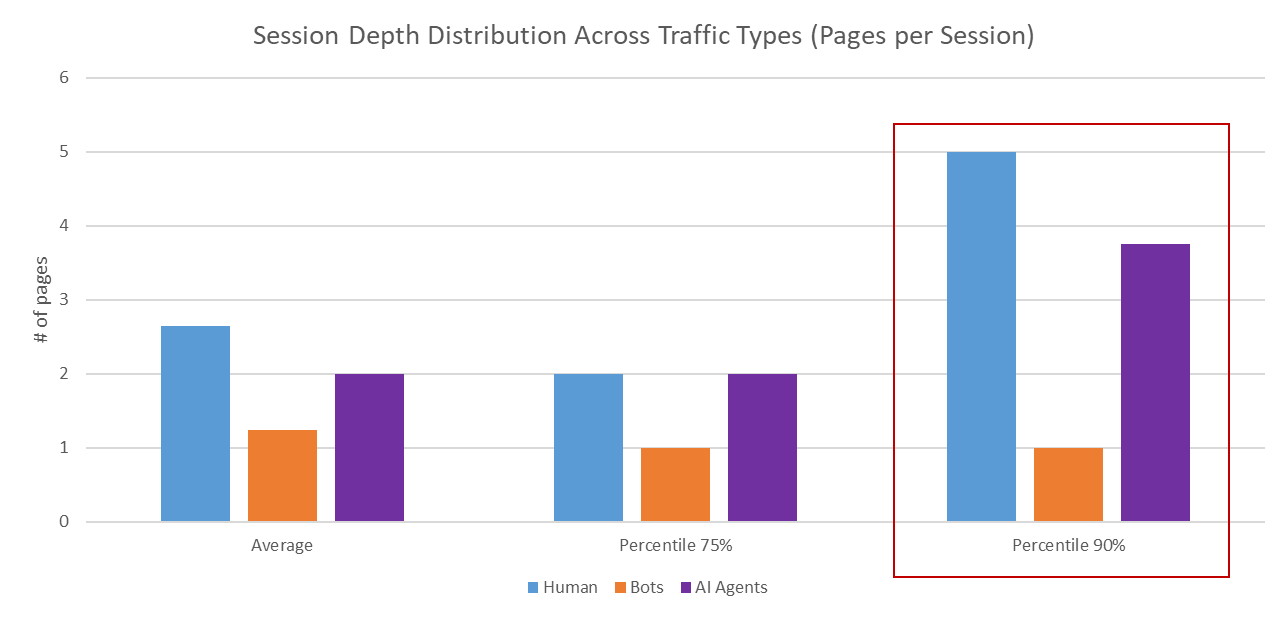
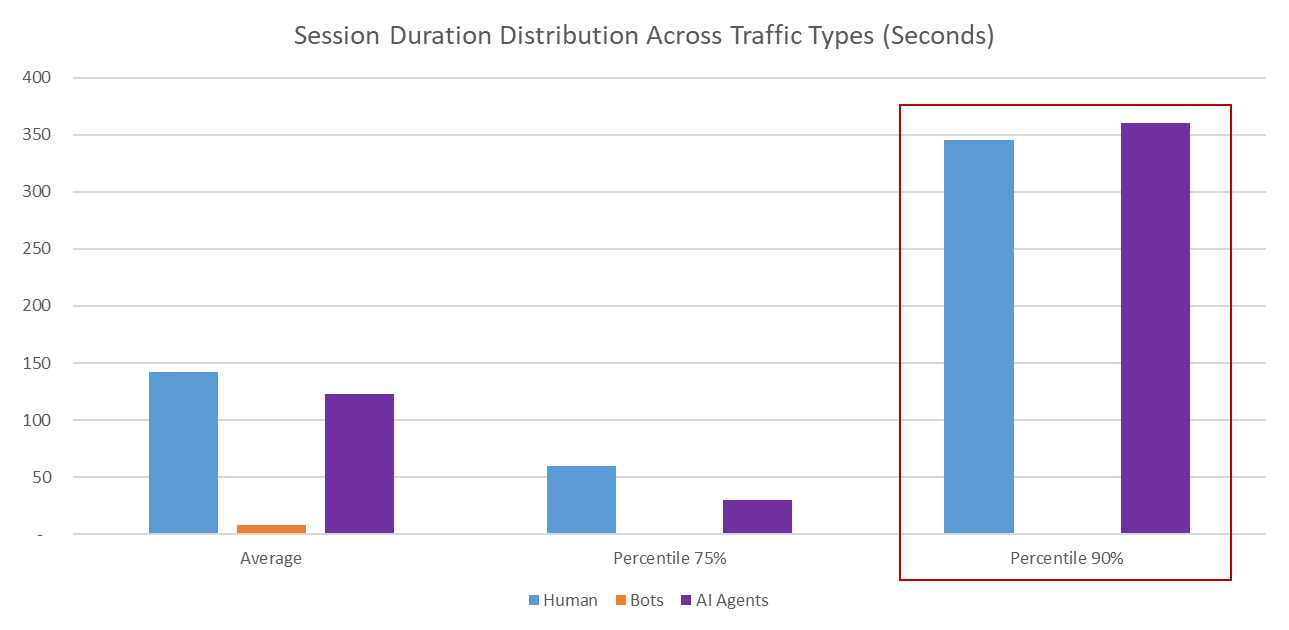
Behavioral analysis shows that AI agents do not resemble traditional automated traffic. Across both session duration and navigation depth, AI agent sessions consistently cluster closer to human behavior than to bots. On average, AI agents spend substantially more time per session than automated tools and navigate multiple pages, indicating sustained interaction rather than single-step retrieval. This separation from bot behavior is especially pronounced in session duration, where AI agents align closely with human browsing patterns across both typical and upper-percentile sessions.
Distributional analysis further highlights the limitations of traditional session-based metrics when applied to autonomous systems. Unlike human users, AI agents do not exhibit a natural beginning or end to activity; they may persist indefinitely, wake periodically, branch tasks, or resume execution with full context long after initial interaction. When AI agent activity is evaluated using models originally designed for human browsing, higher-percentile interactions exhibit deeper navigation and longer persistence, challenging conventional assumptions used to identify scripted automation. These patterns do not imply that agents behave like humans, but rather that emerging agent behaviors do not conform cleanly to either human or bot classifications. Unlike human users, agents may operate intermittently, resume tasks over extended periods, or parallelize actions across sessions, rendering concepts such as session boundaries and page counts increasingly imperfect proxies for intent. The resulting overlap underscores that AI agents already constitute a distinct behavioral category – one that exposes the limits of legacy traffic models and reinforces the need for behavior-aware, context-sensitive detection approaches as autonomous interaction continues to evolve.
Trend 4 – Early Signs of AI Agent Progression Beyond Passive Browsing
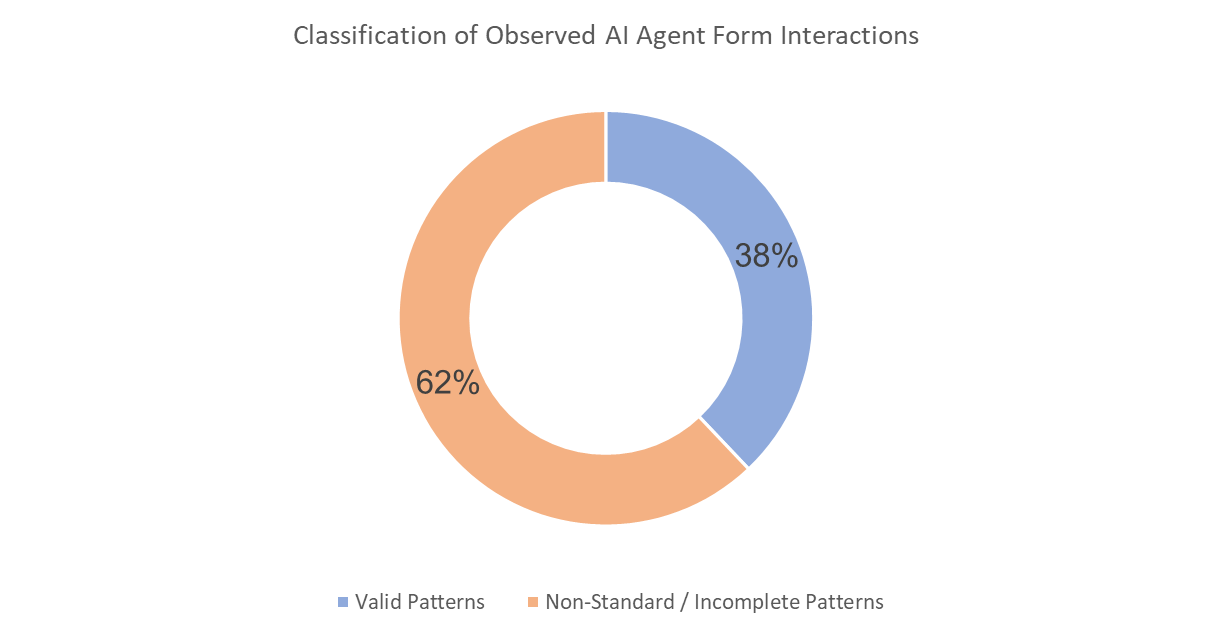
Importantly, interactions classified as non-standard or incomplete do not necessarily indicate malicious intent. Many reflect early-stage experimentation, testing of agent capabilities, or partial execution rather than abuse.
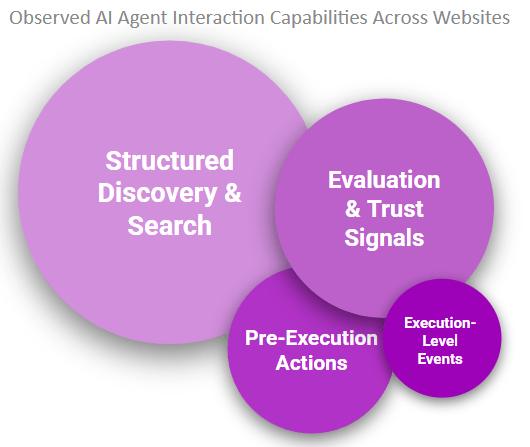
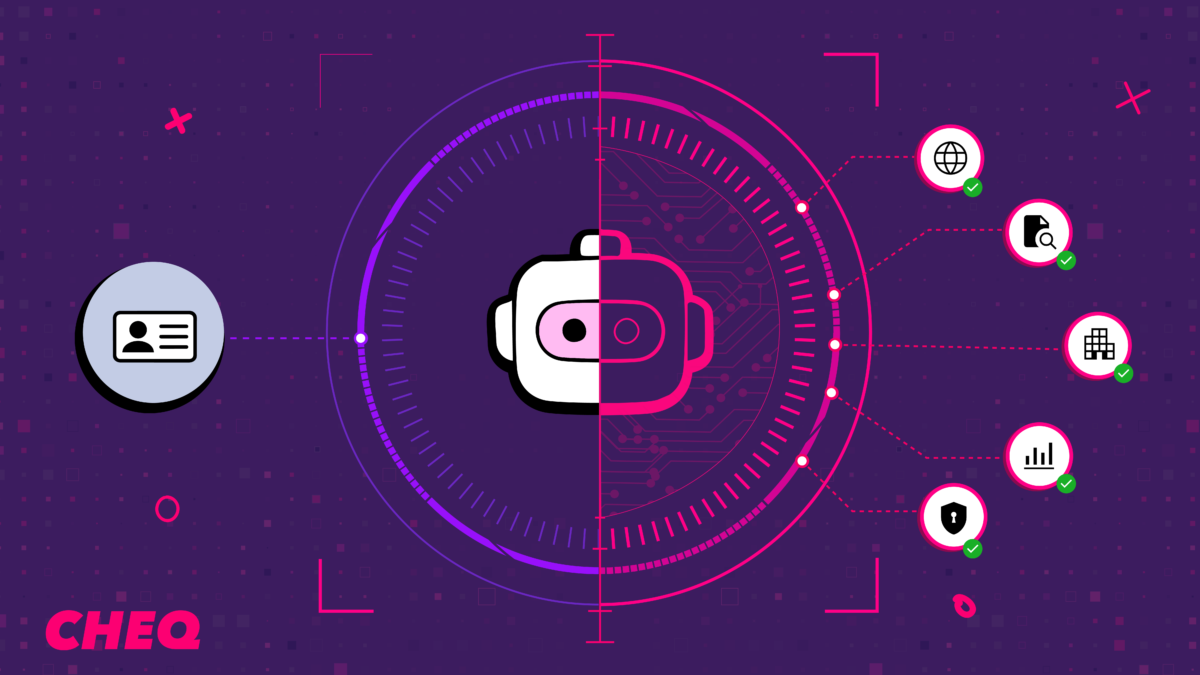
Observed progression of AI agent interaction capabilities across selected enterprise environments. Circle size reflects relative prevalence, not frequency or completion rates.
Early observations indicate that AI agents are beginning to progress beyond passive navigation into structured, intent-driven interaction patterns traditionally associated with human users. Across a limited but growing set of enterprise environments, agents were observed engaging with platform-native discovery mechanisms such as internal search, listing exploration, and catalog navigation, closely mirroring how users initiate tasks on complex digital properties. In several cases, this activity extended into evaluation-oriented behaviors, including repeated interaction with product details, reviews, ratings, and trust indicators, suggesting agents are capable of navigating decision-support surfaces rather than merely retrieving content. More notably, a small number of interactions reached pre-execution and execution-adjacent stages, including form submissions, cart views, registration attempts, and early checkout steps. While these actions remain rare in absolute volume and execution quality varies, their presence demonstrates technical feasibility rather than theoretical possibility. Importantly, non-standard or incomplete interactions do not necessarily indicate malicious intent; many reflect early-stage experimentation, testing of agent capabilities, or partial execution as agents learn to operate within human-designed workflows. Compared to traditional bots, these behaviors follow semantically coherent sequences aligned with expected user journeys, reinforcing that they represent intent-driven interaction rather than automation noise. Taken together, these signals mark an early transition point: AI agents are beginning to traverse the same functional pathways that underpin digital business outcomes, underscoring the need for continuous behavioral monitoring and proportional controls beyond simple agent verification as autonomy and scale continue to evolve.
Why This Trend Deserves Attention
AI agents are not simply increasing the volume of automated traffic; they are changing its nature. By interacting through interfaces designed for human decision-making, and not only via agent-designated protocols and interfaces agents challenge long-standing assumptions about how intent, legitimacy, and risk are inferred online. This shift is occurring before AI agents reach material traffic scale, making early visibility more valuable than retrospective analysis.
Because AI agents operate on behalf of users, even low-frequency interactions can carry higher significance than traditional bot traffic. As autonomy increases, the cost of misclassification – treating agents as either benign humans or generic bots – will rise. Monitoring AI agent behavior now provides organizations with a critical window to understand emerging interaction patterns before they become normalized.
Implications for Digital Businesses
The emergence of AI agents introduces a new interaction layer between users and digital services. Platforms optimized for human navigation may increasingly be accessed by systems that interpret content, execute workflows, and make decisions autonomously. This has implications for analytics, security, and user experience alike.
Traditional traffic classification models, which rely heavily on static indicators or volume thresholds, may struggle to accurately contextualize AI agent behavior. Businesses that lack the ability to distinguish between human, bot, and agent-driven interactions risk losing visibility into how their digital properties are actually being used or misused, as agents become more capable.
Over time, as this interaction layer matures, it is reasonable to expect that the same dynamics seen with previous automation technologies will emerge: alongside legitimate use, agents may also be leveraged for fraudulent, abusive, or manipulative activities. The ability to observe, classify, and respond to agent behavior based on intent and behavior, alongside identity linkage, will therefore become increasingly important as agent adoption expands.
Early Guidance for Practitioners
At this stage, organizations should focus on identifying and understanding, not restricting, AI agent activity. The priority is establishing visibility into where agents appear, how they interact with key site surfaces, and how their behavior differs from existing automation.
Rather than relying solely on verification or static allowlists, practitioners should begin incorporating behavioral signals, such as navigation patterns, interaction depth, and workflow progression, into their monitoring frameworks. This approach allows legitimate experimentation to continue while creating a foundation for proportional controls as agent activity evolves.
Conclusion: What to Watch Next
The patterns observed in 2025 represent the early formation of a new class of web interaction. In the near term, AI agent activity is likely to remain episodic and uneven, shaped by platform capabilities, user trust, and environmental constraints. Over time, however, agents are expected to move further into decision-support and execution roles across digital environments.
Key signals to watch include increased consistency of high-intent actions, broader use of platform-native tools, and convergence between agent and human interaction patterns in sensitive workflows. Organizations that build behavioral visibility now will be best positioned to adapt as AI agents transition from experimentation to routine participation in the web ecosystem.

Author
Amir Zachar
Product Analyst Lead