Guide to Detecting Malicious AI Agents and Synthetic Interactions
CHEQ
Bot & AI Agent Trust Management
June 04, 2026
-
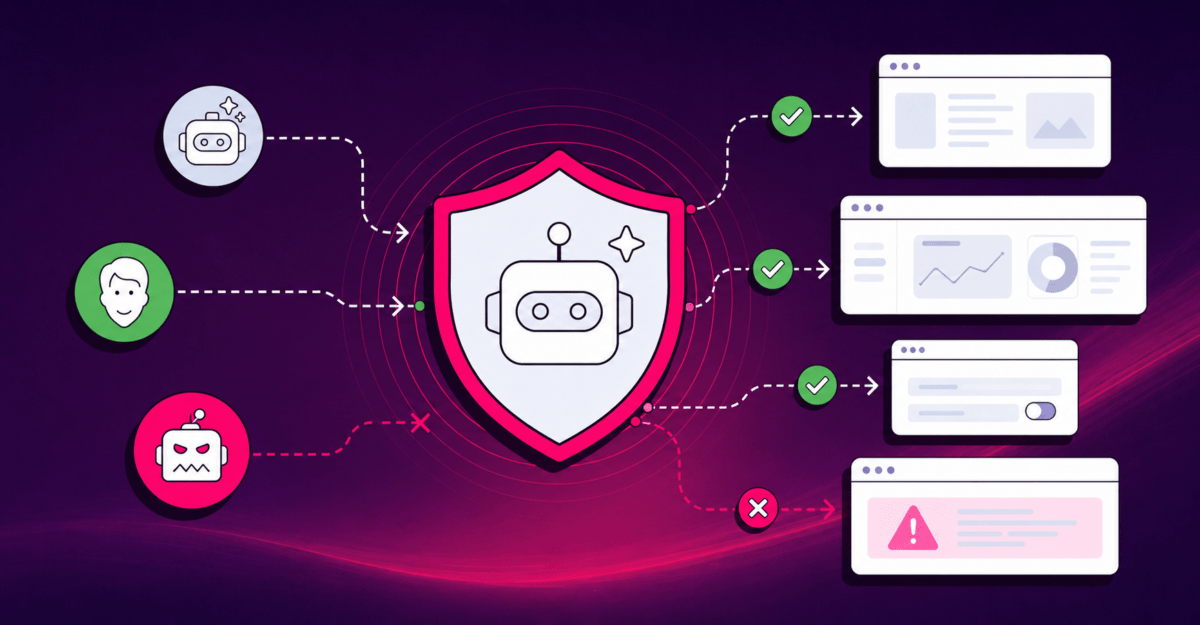
Modern automation includes AI agents that mimic human behavior, making binary “human or bot” detection unreliable on its own.
-
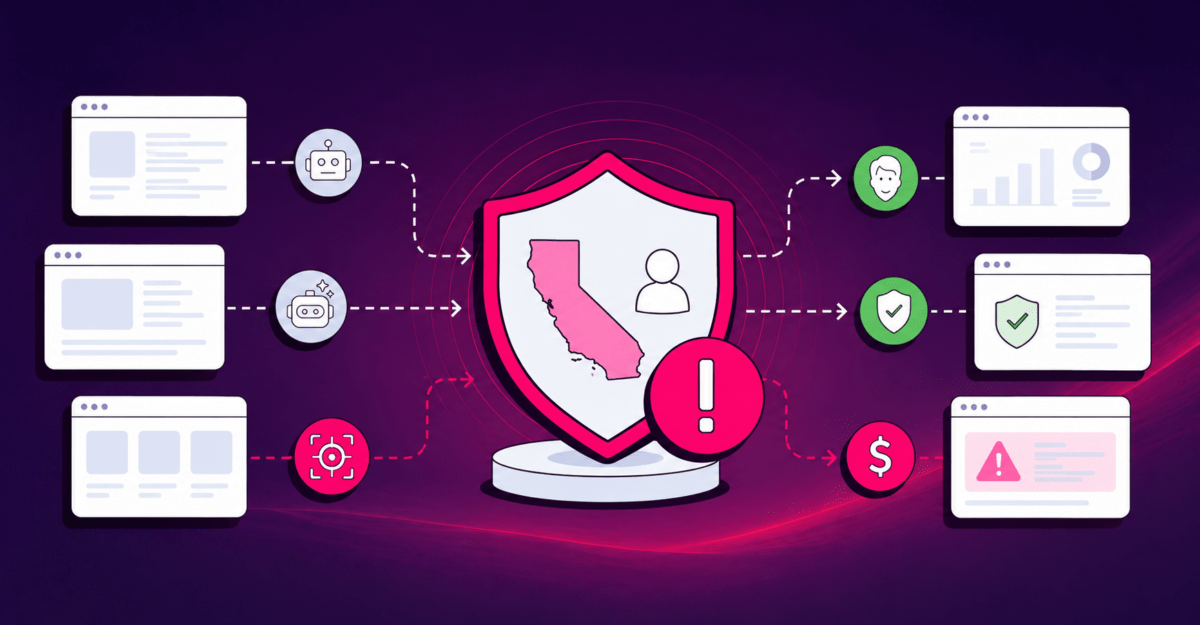
Malicious AI agents and synthetic digital actors target ad budgets, accounts, sign-up flows, and analytics, often using identities that look authentic at a glance.
-
Layered detection across Traffic Integrity Analysis, User Input Validation, and Identity Intelligence is the modern standard for verifying authenticity.
-
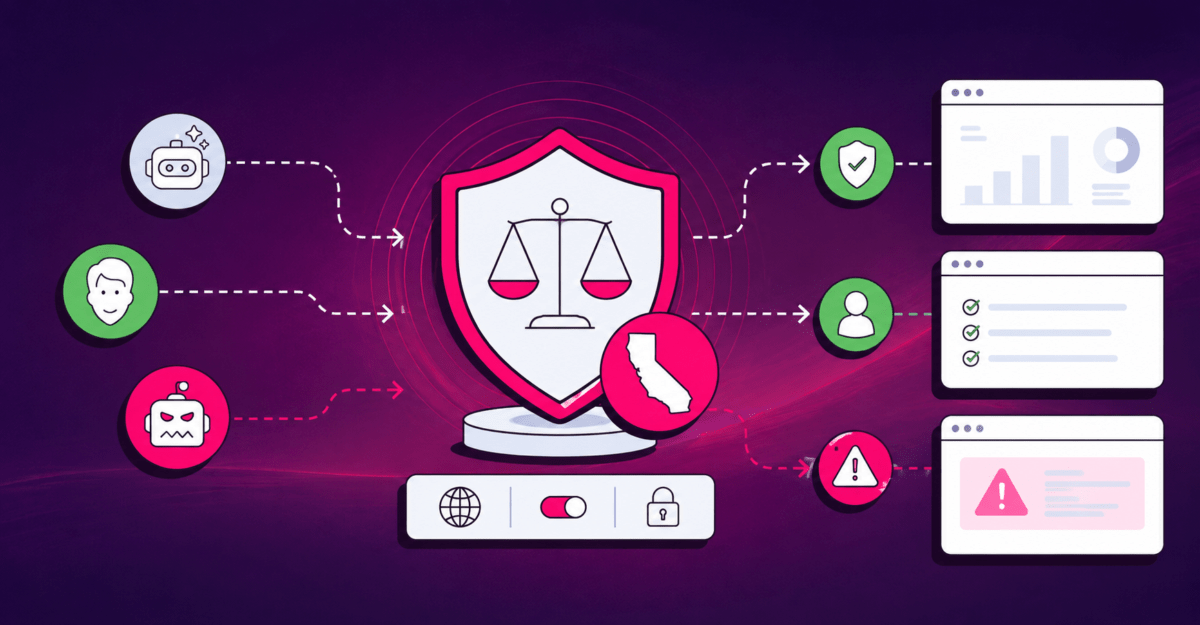
A modern trust framework affirms good automation rather than blocking all automation, aligned with Forrester’s Bot and AI Agent Trust Management category.
-
The operational question shifts from “is it a bot?” to “is this interaction trustworthy?” based on entity, authenticity, and intent.
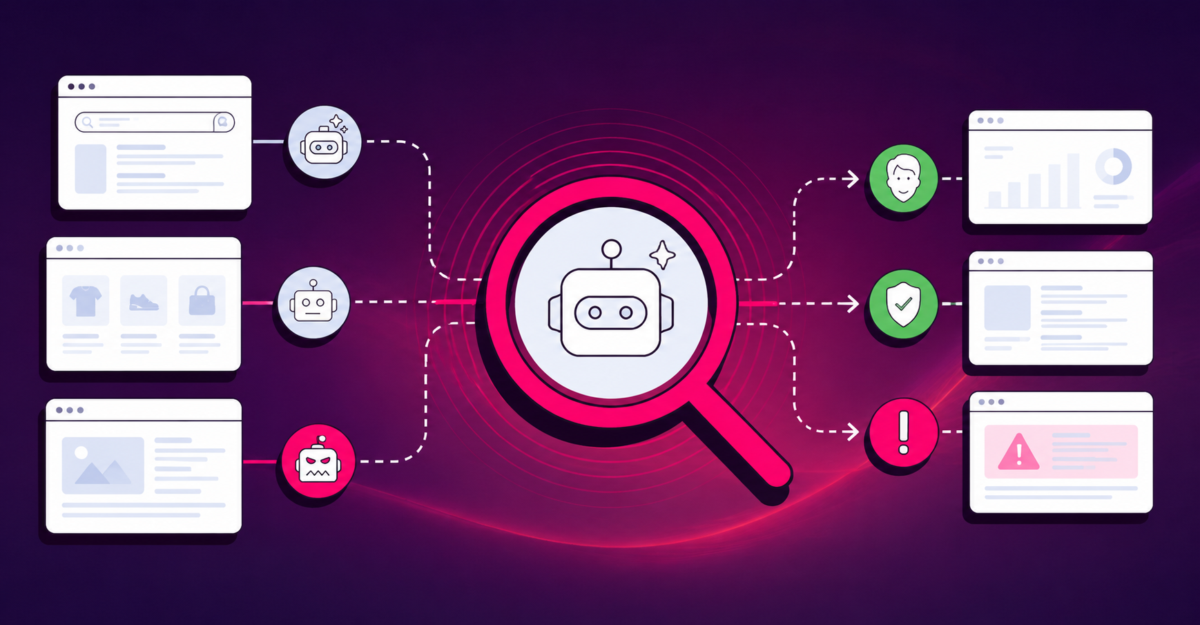
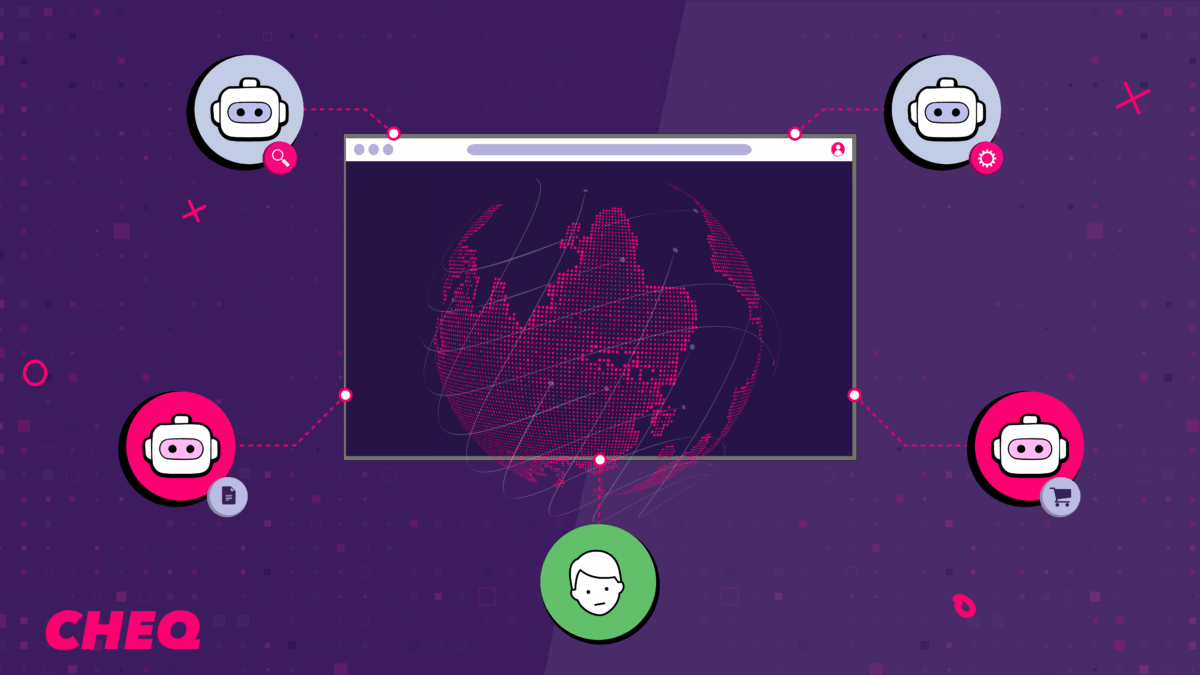
The digital customer journey has changed. AI agents now browse, compare, fill forms, and complete transactions on behalf of humans. That shift creates a new detection problem. Traditional models built around “is this a human or a bot” no longer fit a web populated by autonomous agents, scripted bots, synthetic personas, and human users in the same traffic flow.
Not every automated interaction is harmful. Many AI agents act on behalf of legitimate users. But the same agentic infrastructure can be used to commit fraud, manipulate analytics, drain ad budgets, and impersonate real people. Detection now means deciding which interactions to trust, not which to block on sight.
This guide walks through how detection has evolved, what malicious AI agents and synthetic digital actors look like in practice, the layered signals that surface them, and the framework businesses can use to govern automation without disrupting legitimate traffic.
What Has Changed in the Digital Customer Journey?
Automation in customer journeys has evolved from rigid scripted bots to AI agents that operate with adaptive, human-like behavior. Older bots followed fixed instructions and produced telltale signs: faster-than-human typing, malformed headers, inconsistent device fingerprints. Modern AI agents reason, adapt, and reproduce many of the signals that once implied trust, including realistic timing patterns and valid-looking device characteristics.
The result is that no single signal is reliable on its own. A consistent fingerprint used to imply a returning user. An IP from a residential ASN used to imply a real consumer. Both can now be reproduced or rented at scale. The same applies to behavioral biometrics, mouse movement, and form-fill patterns. Agents can replicate them well enough to pass single-signal checks.
This forces a shift from binary detection (“is it a bot?”) to contextual verification (“is this interaction trustworthy, regardless of who or what is behind it?”). The question is not just whether something is automated, but whether the entity behind the interaction has authority, history, and intent that justify trust at this specific moment. The table below summarizes how detection differs between traditional bots and modern AI agents.
| Detection Aspect | Traditional Bots | Modern AI Agents |
|---|---|---|
| Behavior Pattern | Scripted, repetitive sequences with predictable pacing | Adaptive, human-like reasoning that reacts to context and resistance |
| Intent Profile | Almost always adversarial or unauthorized | Can be legitimate, ambiguous, or adversarial depending on operator and context |
| Detection Signals | Triggered by anomalies like malformed headers, headless indicators, and inconsistent fingerprints | Can mimic familiar fingerprints and behavioral patterns, requiring multi-signal correlation |
| Trust Decision Model | Binary allow or block based on a single classification | Proportional response based on entity, authenticity, and intent |
| Operational Question | “Is this a bot?” | “Is this interaction trustworthy, regardless of who or what is behind it?” |
What Are Malicious AI Agents and Synthetic Digital Actors?
Malicious AI agents are automated entities that impersonate humans or legitimate agents to commit fraud, steal data, or manipulate analytics. They differ from older bots because they can reason about context, hold session state, react to challenge flows, and adjust behavior when they detect resistance. They are increasingly built on the same agent frameworks that power legitimate AI assistants, then redirected to adversarial goals.
Synthetic digital actors are fabricated identities or digital personas that appear real but are generated or controlled programmatically. They combine real-looking profile data, plausible behavioral patterns, and increasingly, agent-driven interaction. Synthetic actors are harder to surface than bots because each one is designed to look unique. A bulk attack of one thousand synthetic actors does not look like one thousand identical bots. It looks like one thousand distinct users.
These actors are used to pursue several motivations:
- Ad fraud and click manipulation, draining paid media budgets and distorting campaign reporting
- Account takeover and credential stuffing, using stolen credentials against login endpoints
- Fake sign-ups and synthetic identity fraud, polluting CRM data and exploiting onboarding incentives
- Analytics distortion, skewing conversion rates, A/B test results, and audience profiles
The threat landscape is no longer about bots in isolation. It is about synthetic ecosystems that blend automation, spoofed identities, and adaptive behaviors, often coordinated across many channels. Effective detection requires inspecting traffic against the full context of the agentic web, not against a static bot signature. CHEQ explores how legacy controls fall short in its analysis of WAF (web application firewalls) vs bot management, and CHEQ Analytics provides AI traffic detection that integrates entity-level classification into existing analytics platforms.
How Businesses Can Detect Malicious Interactions in Practice
Layered detection is the modern standard for verifying authenticity in a mixed traffic environment. No single signal is definitive. Businesses correlate multiple dimensions, including environment, input quality, and identity, to evaluate whether a given interaction is legitimate. The layers combine differently depending on the action being protected, since the risks at sign-up are not the same as the risks at checkout or login. The practical guide is to apply the layer mix that maps to the threat model of each high-value action.
Protecting Sign-Up and Registration
Sign-up flows attract bots, synthetic actors, and low-intent visitors that abuse onboarding incentives or pollute downstream CRM data.
Traffic Integrity Analysis validates the technical environment, flagging headless browsers, automation frameworks, and spoofed device fingerprints. User Input Validation checks the data being submitted, catching disposable emails, malformed phone numbers, and nonsensical free-text entries. Identity Intelligence cross-references the visitor against a wider network to confirm whether the identifier has a legitimate activity history or appears synthetic.
Together, these layers separate authentic prospects from automated and synthetic submissions before the lead enters the funnel.
Securing Checkout and Transactions
Checkout flows attract card testing, fraudulent purchases, and stolen-identity transactions.
Identity Intelligence takes the lead here, validating billing and shipping consistency while detecting patterns like address cycling (rapid rotation through different shipping addresses from one source) and impossible travel (location changes that cannot be physically achieved in the elapsed time). User Input Validation confirms the transaction is not initiated with fabricated identifiers, and Traffic Integrity Analysis validates the agent’s environment fingerprint.
The combination helps protect revenue without blocking legitimate, high-value purchases. CHEQ’s approach to bot management applies this same layering across transaction risk.
Validating Logins and Account Access
Login endpoints are prime targets for account takeover and credential stuffing.
Identity Intelligence detects anomalies like new devices, suspicious login times, or unusual agent precision compared with the account holder’s historical patterns. Traffic Integrity Analysis confirms the request originates from a coherent agent rather than an automation framework.
Together, the two layers distinguish a legitimate returning user (familiar device, familiar location, familiar timing) from a hijacker (new device, mismatched timing, automation indicators) without forcing friction on every login.
The Key Detection Layers and Their Signals
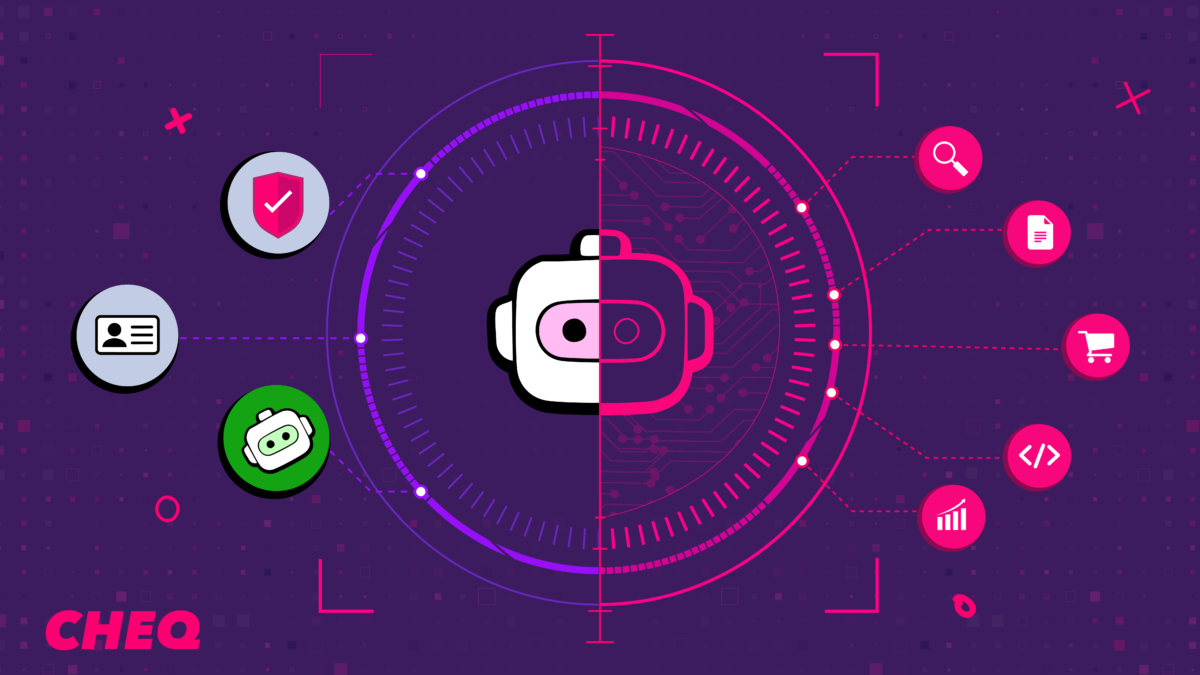
Modern detection platforms organize signals into three operational layers: Traffic Integrity Analysis, User Input Validation, and Identity Intelligence. CHEQ’s implementation correlates more than 800 distinct signals across these layers, with each layer focusing on a different dimension of the interaction. The table below summarizes the focus, signal examples, and detection outcomes for each layer, with the sections that follow detailing specific signals within each one.
| Detection Layer | Signal Focus | Signal Examples | Detection Outcomes |
|---|---|---|---|
| Traffic Integrity Analysis | Agent classification, network behavior, and execution environment | Self-declaring headers; automation and JavaScript instrumentation; injected DOM elements; multi-dimensional fingerprints | Classify AI agent types, verify authentic agents, and flag impersonators or falsified identities |
| User Input Validation | Human versus automated interaction precision | Disposable, spam, malformed, or high-risk emails and phone numbers; typing cadence and input entropy; form completion velocity | Differentiate authentic human input from automated or agent-generated submissions |
| Identity Intelligence | Contextual and graph-based verification | Known good user, trusted user operating an agent, reputable agent identification, fraudulent user, or fraudulent agent detection | Correlate activity across the Identity Graph to confirm legitimacy, detect impersonation, and assess agent reputation |
Here is a closer look at the signals operating inside each layer.
Layer 1: Traffic Integrity Analysis Signals
Traffic Integrity Analysis inspects the technical environment of the interaction, including the agent, the browser, and the network it operates from. The job of this layer is to determine whether the environment is consistent with a real user on a real device, or whether it has been instrumented for automation.
- Automation framework detected: The environment exposes signatures associated with scripted automation, including indicators that the browser is running under the control of an automation library.
- Location spoofing detected: The apparent location signaled by the IP conflicts with other network indicators, suggesting a VPN, proxy, or residential proxy is being used to mask origin.
- Inconsistent device fingerprint: Device characteristics such as canvas hash, timezone, and language change frequently across sessions, suggesting an automation framework is rotating identities rather than a real user logging in from different contexts.
Each signal can have a benign explanation on its own. The combination is what separates instrumented automation from legitimate users with privacy tools or shared devices.
Layer 2: User Input Validation Signals
User Input Validation evaluates the quality and legitimacy of the data being submitted. It surfaces inputs that look plausible at a glance but fail closer inspection.
- Disposable or temporary email: The submitted email address belongs to a known temporary domain, indicating a low-trust or synthetic submission.
- Invalid or suspicious phone number: The number does not conform to valid formats, points to a VOIP-only block, or uses a country code inconsistent with the visitor’s apparent location.
- Nonsensical or automated text entries: Free-text fields contain gibberish strings (“asdf”), placeholder values (“test”), or AI-generated patterns that match templates observed across other suspect submissions.
Together, these signals catch submissions that are technically well-formed but substantively fake, before fabricated identifiers reach the CRM and start degrading lead quality and downstream reporting.
Layer 3: Identity Intelligence Signals
Identity Intelligence uses contextual and historical data to evaluate whether the entity behind the interaction is who it appears to be. Identity signals can both raise suspicion and affirm trust.
Suspicious signals include:
- Impossible travel: The visitor was recently observed in another geographic location and could not have traveled to the current one in the elapsed time.
- Address, email, or data cycling: The same source rapidly rotates through different identifiers, indicating form stuffing or coordinated data manipulation.
Trust-affirming signals include:
- Familiar device, IP, or network: The visitor has an established history of legitimate activity from this configuration.
- Home location: The interaction originates from the visitor’s primary area of known activity.
For deeper background on tying agent activity back to authorized human actors, CHEQ’s analysis of AI agent identity management covers the enterprise blind spot in more detail.
How to Build a Trust Framework for the Human-AI Era
The goal of a modern trust framework is affirming good automation, not blocking all automation. Useful AI agents now interact with retail catalogs, support flows, and analytics tools on behalf of real users. Treating every automated visit as adversarial slows legitimate buyers, harms partner integrations, and creates friction with the agent ecosystems enterprises will increasingly depend on. The framework instead asks which automation to enable, which to constrain, and which to block, based on entity, authenticity, and intent.
Core principles of a modern framework:
- Treat signals as contextual, not absolute. An automation indicator is not automatically bad. The same fingerprint can represent a benign assistant or a credential stuffer, depending on what surrounds it.
- Define what trusted AI means for the business. Identify known commercial agents, internal tools, and partner integrations that should be allowed by default, and document the operational policies that govern them.
- Continuously evaluate signals across sessions and devices. Trust is not a single-point decision. Apply continuous affirmation at higher-risk transitions like checkout, account changes, and credential resets.
- Adopt layered, explainable detection. Each enforcement action should map to a clear set of signals and reason codes, so operators can tune the system as attacks evolve.
Forrester has defined this practice as Bot and AI Agent Trust Management, a category that replaces legacy bot mitigation as the framework for governing the full spectrum of humans, bots, and AI agents in the digital customer journey. The category formalizes the shift from blocking automation to deciding which automation to trust.
Takeaways and Next Actions
Detecting malicious AI requires multi-layered analysis, continuous learning, and a shift from binary detection to contextual trust assessment. The goal is not just blocking threats. It is enabling a safe and efficient digital ecosystem for both human visitors and legitimate AI agents.
Practical next steps:
- Audit the current detection strategy to identify gaps in handling sophisticated automation and synthetic actors.
- Evaluate how the business differentiates between malicious bots and legitimate, value-adding AI agents across sign-up, checkout, and login flows.
- Explore modern trust frameworks that protect the customer journey without adding unnecessary friction to legitimate users and approved agents.
Taken together, these steps move the organization from reactive bot detection toward continuous, context-aware trust decisions across every entity in the customer journey, human or agent.

Author
CHEQ
CHEQ internal specialists who collaborate on content and its maintenance to provide high-quality, accurate information for the community.