Everything You Need to Know About Click Farms
Sanja Trajcheva
Cyber Risks & Threats
July 09, 2026

-
A click farm is any operation, human-staffed or automated, that generates internet traffic, social engagement, or ad clicks in bulk for artificial purposes
-
Traditional click farms relied on cheap human labor ($1–$2/day per worker); AI has largely replaced this model with autonomous agents on cloud servers
-
Click farms operate at scales from 18,000-employee operations to home-based setups; their geography spans dozens of countries
-
The distinction between click farms (human-operated) and bot farms (automated) has blurred as AI agents now handle tasks that previously required workers
-
Governing click farm traffic requires entity-level classification, not just IP blocking, because AI-powered operations use residential proxies that appear as legitimate users
As likes, clicks, and followers have become more important to businesses and our lives, a whole industry has grown: click farms. You may have read about click farms, maybe via news reports that a well-known celebrity inflated their followers with bought clicks or how the proliferation of ‘fake news’ is often backed by news factories. If you’re a regular reader of this blog, you’ll have noticed that we mention click farms regularly. But what is a click farm?
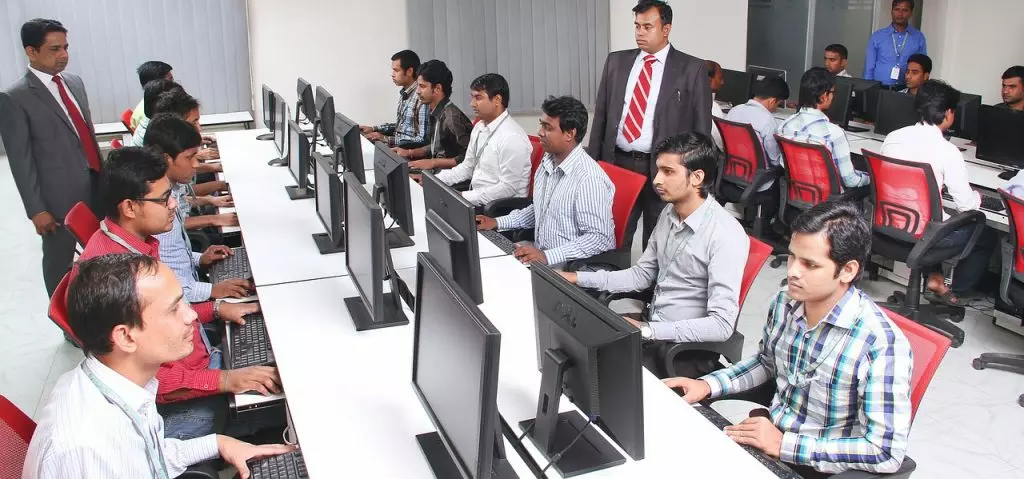
There are a couple of famous images of click farms doing the rounds online. One is from the HBO series Silicon Valley, where the final shot of one episode shows a warehouse in Bangladesh full of people clicking away on computers like a dystopian cyber-cafe.

Another shot is of a real click farm in China, with rows and rows of phones linked together and operated by a lone worker.

Although the Silicon Valley image is fiction, it is very much rooted in real life. And, of course, the image of the lady with the wall of phones is taken from an actual click farm – so perhaps this is what they’re really like?
For this article, I spoke to several people who work in the paid traffic industry to find out the truth about these mysterious operations. The names of all contributors have been changed at their request.
What is a click farm?
By definition, a click farm is any location that generates internet traffic, in bulk, for a variety of purposes.
It can either be operated as a business offering a variety of digital interaction-based services; or as an independent enterprise to proliferate clicks for different purposes. You might also have heard references to ‘like farms’ and ‘troll factories’ – which are both forms of click farms.
Click farms are easily available for hire through resellers found on the internet. This means you can pay for a person or a bot to click on or interact with whatever you want online.
Services offered by click farms can include:
- Social media followers and likes
- Posting comments on websites or social media
- Generating website traffic
- Creating backlinks
- Carrying out repetitive click-based tasks
- Channeling traffic to fraudulent sites to increase rankings, domain authority or to collect payouts on display ads
- Sharing, often fake, news articles (troll factories)*
*Although the practice of troll factories has come to be well known, and they are a form of click farm, we won’t be covering them in this article as they are a whole other industry.
The click farm itself might be made up of hundreds, even thousands, of people working from computer terminals, as in the Silicon Valley image.
But they are more likely to be made up of multiple devices, such as phones or tablets, with a team of human operators running them.
The firsthand accounts in this article were gathered in 2020, when the human-operated model below was still dominant. The comparison table that follows shows how operations have since evolved. For the full AI-powered picture, see The AI Era section.
| Traditional Click Farm | AI-Powered Click Farm | Hybrid Operation | |
|---|---|---|---|
| Workers | Human (100s–1000s) | Autonomous AI agents | Humans + bots |
| Location | Physical sites (Asia, Africa, etc.) | Cloud servers, no fixed location | Distributed |
| CAPTCHA bypass | Human solvers | AI solver APIs | Both |
| IP masking | VPNs, SIM rotation | Residential proxy networks | Both |
| Scale ceiling | Labor supply | Cloud compute budget | Mixed |
| Vulnerabilities | Raids, SIM tracking, arrests | No physical footprint | Partial |
| Detection | IP blocking, known signatures | Entity-level trust decisions | Both needed |
James is from India but works for a US-based company that resells click farm services online, focusing on business building such as backlinks and social media. He told us that one click farm that he works with in Taiwan is thought to have around 18,000 employees across 7 locations, with each location able to accommodate around one or two thousand people.
As James points out, even with all of these people, the work is usually supplemented by automated clicks from bots. Automated website traffic is usually the cheaper option, whereas if you need forms or captchas filled out or other human interaction, you can choose a more expensive package that uses humans.
Historically, click farms relied on human workers while bot farms relied on automated scripts, but that line has blurred. Most click farms today use bots for at least part of the work, and many bot farms now route through residential proxies that make their traffic look just as human as a click farm’s. The more useful distinction is between legitimate automation, like search crawlers or AI agents acting on a user’s behalf, and adversarial automation generating inauthentic traffic. For a closer look at how AI has reshaped that side of the industry, see our guide to bot farms.
Where are click farms based?
A click farm can be set up anywhere, although it does seem that Chinese click farms get a lot of the press online. This seems to be because most of the footage of click farms is from those based in China or run by Chinese teams.
The walls of phones and tablets featured in videos often also show Chinese text somewhere in there.
From our research, click farms have been revealed to be operating in:
- China
- India
- Bangladesh
- Taiwan
- Vietnam
- Kazakhstan
- Russia
- Thailand
- Venezuela
- Indonesia
- The Philippines
- South Africa
Although click farms are often found in low-income countries, there are also reports of click farms in Europe and the USA.
‘Cottage industry’ click farms
Although typically click farms are often huge locations, similar to call centers, the click farm industry does allow for small operations too. Anyone can set up a click farm with just one laptop and a couple of phones or using just a few devices and a handful of people.
During my research, I found people who had run small casual click farms from their homes in the rural US and one based in Sweden. It sounded like these were very small operators who were playing with the technology and trying to make a small income rather than generating industrial-scale automated website traffic.
I spoke to one operator, Hasan from Bangladesh, who explained how he ran a small click farm. He had several old phones linked to a laptop and told me he was making good money, but when Google changed their algorithms he decided to stop. “It was just a small operation… I felt like click farms were getting more illegal day by day, so I didn’t think the risk was worth it.”
But, for the big and established click farms, it’s definitely a risk worth taking. With the sheer volume of people working and the demand for paid clicks, click farm operators can make a lot of money.
Click farms and the gig economy
Click farms can also be operated with remote workers, and many sites that sell clicks outsource human click activity to freelancers. These freelancers will most likely be hired through popular outsourcing websites and can cost the click farm operators more than their in-house employees, so they’re used sparingly.
However, during 2020, the Covid-19 pandemic created more demand for work-from-home jobs. One major beneficiary has been the paid-to-click (PTC) industry.
Paid-to-click sites can be accessed by anyone with an internet-connected device. Once you complete a short registration, you can click on banners, watch video ads, and click on Captchas in just a few minutes.
You may only make a few pennies per click, but this can quickly add up, and for those in low-income countries, the payout can be worth the time invested.
In 2020, research from CHEQ found that the big PTC sites paid out over $13 million to remote workers, a figure recorded before AI automation significantly shifted click farm economics. When you consider that many of these workers were making around $10 a day from hundreds of clicks, these remote click farms were generating a substantial volume of inauthentic clicks on paid ads.
Are click farms illegal?
In general, no, click farms are not illegal.
As they are mostly providing services that are technically legitimate, there is nothing to say that click farms themselves should be illegal. The vast majority of the work carried out by click farms is quite mundane; clicking likes on social posts, copying, and pasting comments, following social profiles, and sharing posts. At the moment, all of these actions are legal, even if they are frowned upon.
There is a famous case of a click farm in Thailand being busted by the police, which shows thousands of phones linked together. Although the men were arrested and the click farm shut down, they weren’t charged for operating a click farm. Police charges were focused on the immigration status of the men running the click farm, the smuggling of phones, and the use of illegal unregistered SIM cards.
The truth is that across the world, there are no laws against click farms. It has been written that they are illegal in China, which normally refers to the Chinese Anti-Unfair Competition Law (AUCL). This law actually refers to the practices of stealing trade secrets. It expands the scope and definition of bribery, which can now include paying a third party to give the business an ‘unfair advantage.’ Read: fake reviews or clicking on paid ads. Again, this doesn’t outlaw click farms themselves, but it does make some of their conduct potentially illegal if exposed. However, cases are unlikely to be taken against click farms themselves and are more likely to focus on the business that used the services.
Click worker conditions
With the majority of the world’s click farms based in countries with minimal employment and labor laws, their main legal issues are around employee rights, working conditions, and wages. In fact, the conditions in most click farms are similar to those in sweatshops, but instead of making cheap garments, they’re boosting social likes, building backlinks, and generating web traffic.
James tells us, “For most workers in click farms, they see it as a legitimate job… It’s hard work, but it is consistent, and it pays.” However, like those sweatshop workers, the pay is low. “Yes, most of these workers are on something like $10 a day… People work ten-hour shifts, 24 hours a day.”
Considering that there are hundreds if not thousands of click farms out there, raids and closures are extremely rare. And in fact, the operations that do get closed down are those that focus specifically on fraud and are operated by organized criminals, such as the Methbot or 3ve botnet operations.
Automating clicks
Having armies of people click on social posts, and links is one thing, but an easier way is to automate it. Bots are relatively easy pieces of software to create, which explains their proliferation.
When it comes to click farm activity, bots, and by extension botnets (which are a network of linked bots), have a big part to play. I spoke to Adam, a programmer from Kenya, who told me about how he creates bots to generate likes on Instagram and Facebook accounts. He also uses the same bot to follow people automatically, a popular way of building up your own follower list. But interestingly, he mentioned one other type of bot that he knew about.
“My friend connected 50 phones, all running different Google accounts that click on apps and ads”, he tells me. As simple as that? “It is quite an advanced form of bot… but he uses it to collect payments on survey apps. But he makes good money from it… He needs to rotate the accounts, but he can use them to click surveys and make money easily… and they pay with PayPal or Google Play vouchers.”
Although this may seem like a comparatively simple type of fraud, it takes just a little bit of technical expertise to create a few websites to host display ads and then reroute those bots. For organised click farms, these automated clicks can be extremely effective and cheap once they’re set up.
What Adam described was an early version of a much larger shift. Today, automated tools, not human workers, generate the bulk of click farm activity, and they no longer need a wall of phones to do it.
In fact, most images and videos of click farms are usually of a huge wall of phones linked together, as you’ll see below.
With even a simple click farm bot setup, you can churn out those likes and followers at will. A quick search online shows 165,000,000 search engine results for ‘buy clicks,’ so there is plenty of choice for those looking to boost their social profiles.
In fact, there is even the case of a vending machine, spotted in Russia, which offers likes and clicks on your social posts for just 50 Rubles (around $0.89c) or 100 followers for just $1.77. So you can boost your social media profile while shopping for shoes!
Click farms and click fraud
The practice of click fraud, and its brother ad fraud, is one that is well documented online. A related technique, scraper bots, does something similar, harvesting pricing and content data for fraudulent resale. So how do click farms generate ad fraud, and who would need to do this?
James tells us about how some online advertisers use his service to fill their quotas, “There are some third-party ad providers who can’t fulfill their order quotas for their customers… So, when the promotion is ending, they will use our services to meet their target.”
I ask him to explain, and he tells me, “These aren’t Google ads or Facebook ads, but… Sponsored content from content providers.” I mention a couple of well-known content promoters, and he says, “Similar to those, but smaller companies… The content links have the analytics tracking embedded, but this can be manipulated by click farms.”
As James is at pains to explain, though, his service isn’t fraudulent. “We always tell our clients that our traffic is not organic, but many of our competitors don’t… We don’t offer fraudulent services, but there are plenty of smaller and mid-level companies that do”. He even shows me the variety of services available on his website, many of which are backed by bots and click farms. There is a huge selection, including app downloads and reviews, Twitter followers and retweets, and even YouTube views. Many of these packages work out at pennies, or fractions of a penny, per view.
I ask him if these same click farms are likely to be a source of click fraud too.
“The click farm owners aren’t worried about what they click on, so yes, certainly the same click farms that we use for legitimate means will also do this,” he says.
But as we’ve also seen, you don’t need a click farm to generate those clicks. A savvy programmer anywhere in the world can buy a few old phones and run bots day and night to make money in a variety of ways.
Beyond the direct ad spend wasted on clicks that never convert, this traffic distorts conversion-rate data, skews automated bidding algorithms that optimize on those same signals, and can pollute retargeting audiences with visitors who were never real prospects to begin with.
The techniques used by click farms
Modern Asian click farms have been running their business for years and have become extremely advanced. They have an understanding of how the advertising platform algorithms work and use a variety of practices to get around being banned or spotted.
Adam, the Kenyan bot programmer, tells me, “You have to be careful because if your bot is too active you can get banned. So you use software to change IP and MAC addresses… If you have multiple accounts, you can switch between them every few hours.”
James explains further, “We have different quality bots which we use for social following packages. Often, the cheaper packages have simpler bots, which will eventually be spotted by Instagram or Twitter and be banned. But, we also have bots which are used with more advanced algorithms (and) those followers will last longer.”
If you pay for website traffic, you can specify where it comes from, but it will most likely come from one of these huge click farms. The website that James sells his services through offers a choice between Global or US traffic, with the US traffic often more than double the price. I ask if this is actually click farm traffic. “Yes”, he says, “But via VPN so the location still shows as USA.”
Between VPN-based IP masking and tiered bot quality, the most sophisticated click farm traffic today is functionally indistinguishable from a legitimate visitor using IP-based detection alone.
The growth of click farms and demand for clicks
As James said when speaking in 2020, “I’ve been working in this industry for about 7 years, and in that time, it has grown so much. We used to be one of the only companies offering this service, now it’s saturated.”
One aspect of this is that there is so much more to click on. Social networks have grown in importance for business, and there are more of them than ever before. From Facebook and Twitter, we now have Snapchat, TikTok, Telegram, Quora, Reddit, and Twitch, among others.
Engagement is a badge of trust and an endorsement, so even a thousand followers can be worth a lot to a small business owner. Likewise, reviews are more important than ever, and the practices and industry around creating site backlinks are booming.
And among all this, the trend for inauthentic clicks on paid links, or click fraud, has gone from a niche practice to almost par for the course. It’s no coincidence that the proliferation of click farms has gone hand in hand with ever-increasing inauthentic clicks.
Companies have become savvy about the fact that they can game the system and deplete their competitors’ ad revenue by using fraudulent practices.
The data reflects this scale: across 118 billion visits analyzed in the 12-month period through April 2026, CHEQ’s network detected 15.6 billion instances of invalid traffic (a 13.19% overall rate, up 4 percentage points year-over-year), with total invalid traffic volume growing 44%.
The AI era impact on click farms
The defining image of a click farm has always been human: a room full of workers in Bangladesh, a lone operator in China surrounded by a wall of phones, a freelancer in the gig economy earning pennies per click.
That image is becoming historical.
AI has fundamentally changed the economics of generating coordinated inauthentic engagement, and in doing so, it has changed what a “click farm” actually is.
The original model required cheap human labor.
Workers clicked, watched, followed, and liked: thousands of actions per hour, per person.
The business model depended on labor cost arbitrage. Find workers willing to earn $1–$2 per day in lower-income markets.
It also created operational vulnerabilities: physical locations that could be raided, SIM cards that could be tracked, workers who could identify the operation.
What operators like Adam described in 2020, a single programmer running a bot network from a handful of phones, represents the transitional model between human click farms and today’s fully autonomous AI-powered operations.
AI-powered automation eliminates most of these constraints.
A single cloud server running AI agents can now: navigate websites and interact with forms in ways that accurately mimic human behavioral timing and patterns; run through headless browsers like Puppeteer and Playwright to simulate a full browser session; solve CAPTCHA challenges in real time via AI solver APIs; route each session through a residential proxy network so each “click” appears to originate from a different real household IP address; and generate reviews, comments, and social content that reads as authentically human.
The result is a single operator with a cloud computing account and a residential proxy subscription can now replicate what previously required a building full of workers.
There is no physical location to raid, no workers to find, no SIM cards to confiscate.
The composition of that traffic confirms the shift.
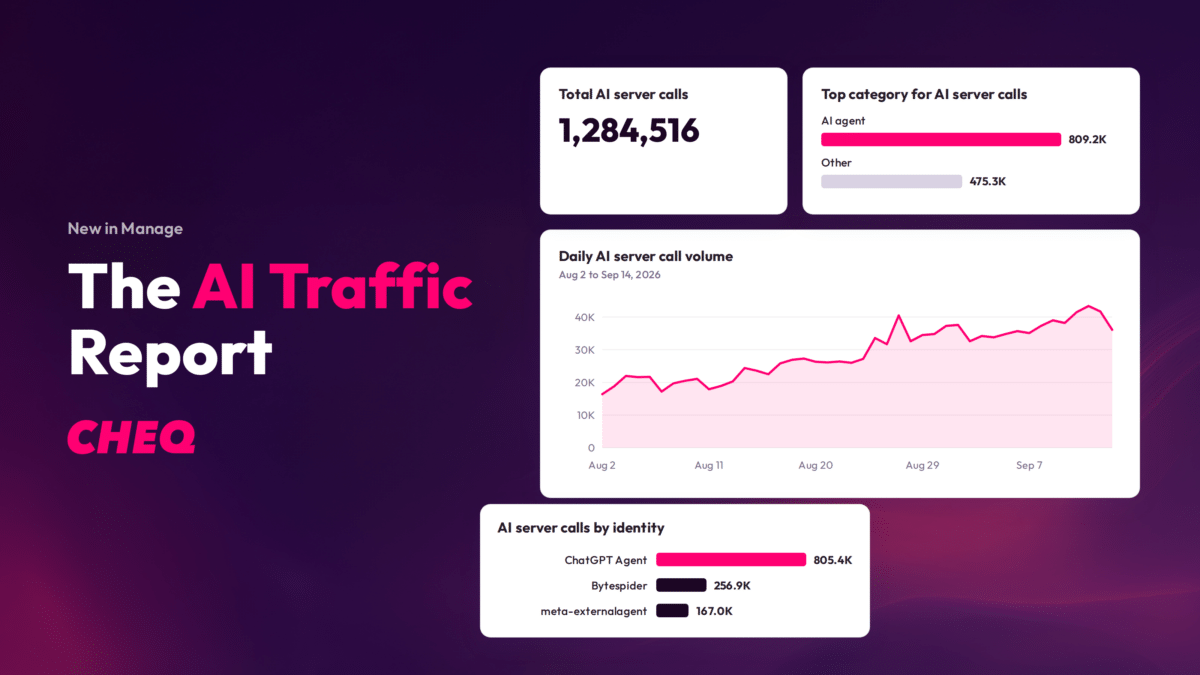
CHEQ’s network data through April 2026 shows automation tools are now the single largest source of invalid traffic, ahead of traditional malicious bots by a wide margin.
Malicious bot volumes actually peaked in fall 2025 and declined into 2026, even as total invalid traffic kept climbing.
The problem is not shrinking; it is evolving.
The response has to match the evolution.
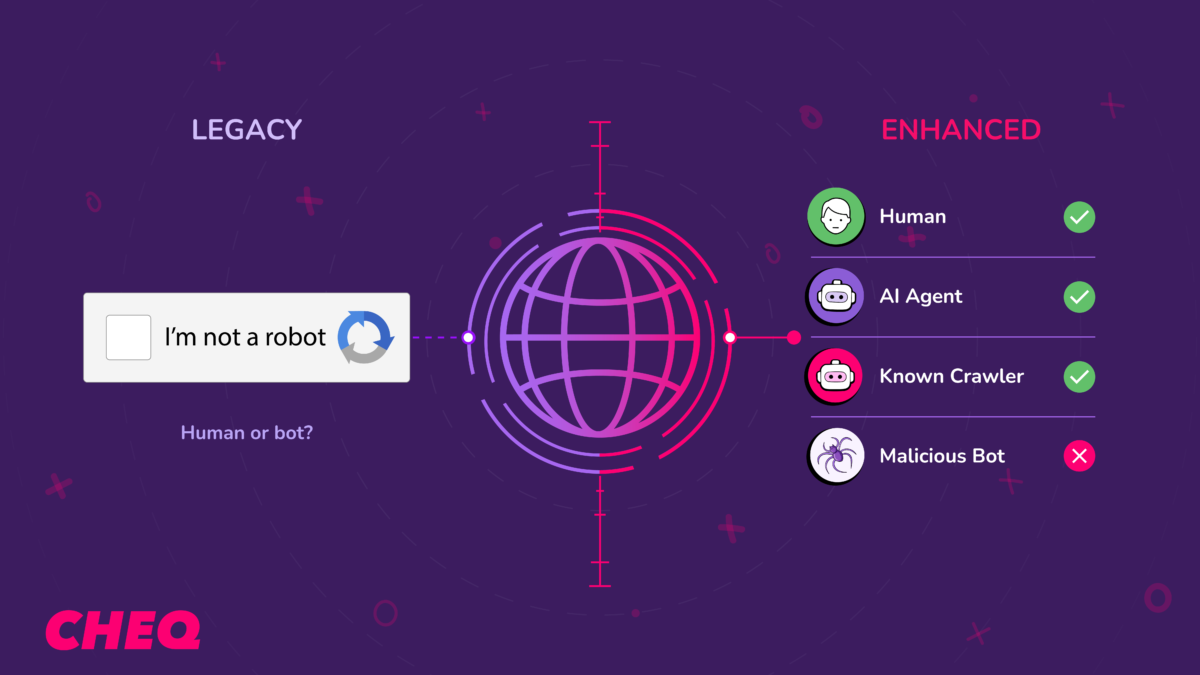
Asking “is this traffic coming from a known click farm IP?” fails against residential proxies.
The question that works is: does the full behavioral, network, and identity profile of this entity look like an authentic human visitor with genuine intent?
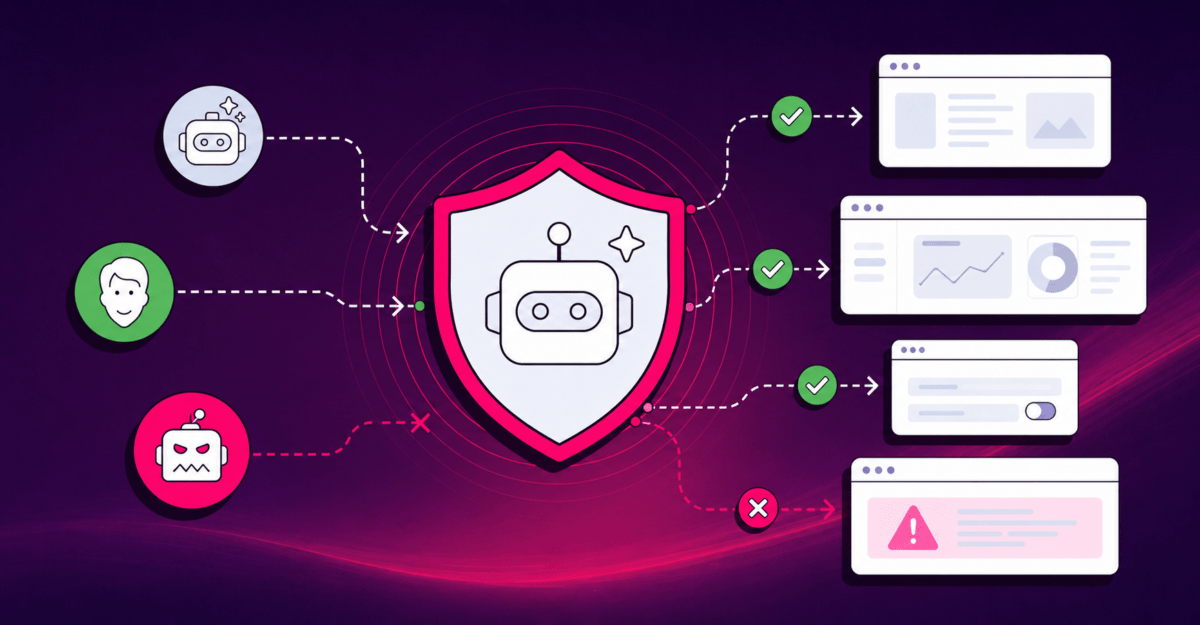
That is entity-level trust evaluation (evaluating the full combination of Traffic Intelligence, Trust Intelligence, and Identity Intelligence), and it is the approach that makes it possible to govern the full spectrum of automated engagement in the AI era.
What does the future hold?
Even during the 2020 coronavirus pandemic, click farm activity continued. James mentioned that most click farms in Vietnam and Taiwan had to follow lockdown laws, with services focusing on automated traffic.
At CHEQ, during March and April 2020, we noticed that a lot of adversarial automated traffic was routed through proxy servers in Europe, which suggests lots of VPNs and automated traffic. Although there was a slight decrease overall during this time, there were still plenty of inauthentic clicks on paid ads.
As we’ve seen, the demand for clicks is huge, with massive click farms working around the clock to meet demand. Even in the post-coronavirus world, we can expect that inauthentic clicks are going to be as valuable as ever, perhaps more so as businesses struggle to rebuild.
The ad networks do offer some level of basic protection from automated or fraudulent traffic. But if you’re paying for clicks, and those clicks are anything from $5 to $50 each, you want to be sure that you’re paying for a genuine potential customer, not a bot or a click farm worker.

Author
Sanja Trajcheva
As an experienced content writer, Sanja is a firm believer in the power of storytelling to inspire and educate audiences. In her role at CHEQ, Sanja fearlessly tackles the challenges of the fake web – navigating through fake traffic, ad fraud, and click fraud. When not writing, she enjoys exploring new tastes and planning her next adventures.