The AI Agent Split: Half of Commerce Is Locking Out Its Next Customer
Spencer Bossi-Johnson
Agentic Web
October 23, 2026
AI agents are the web’s next great customer, but now some of the biggest brands are turning them away at the door. Delta won’t let agents book tickets on behalf of eager travelers, Schwab and JPMorgan Chase keep them out of customer accounts, and Yelp only lets in agents that pay for its data. Meanwhile, Amazon is fighting Perplexity in court.
Banking has gone further. A week after JPMorgan Chase CEO Jamie Dimon said the bank won’t let outside agents act inside its systems, Axios reported that major U.S. banks, including Morgan Stanley, Bank of America, and Wells Fargo, have found unauthorized AI agents operating inside customer accounts. Some of those agents were acting on their own, without clear instructions from the account holder.
At the same time, Shopify, Mastercard, and Walmart are building checkouts, payment rails, and dedicated agent channels so agents can buy on a shopper’s behalf. That leaves the agentic web split down the middle. What’s driving the blocks is a lack of visibility. Without a way to tell a good agent from a bad one, many brands are shutting out every agent. Here, we break down which brands are blocking agents and why, the companies letting agents in, and how to tell good and bad agents apart to win the agentic web.
-
The agentic web is splitting in two: Delta, Amazon, eBay, Yelp, JPMorgan Chase, Charles Schwab, and a growing list of major U.S. banks are blocking AI agents. Shopify, Walmart, Target, Mastercard, and JPMorgan Payments are building ways for agents to shop and pay.
-
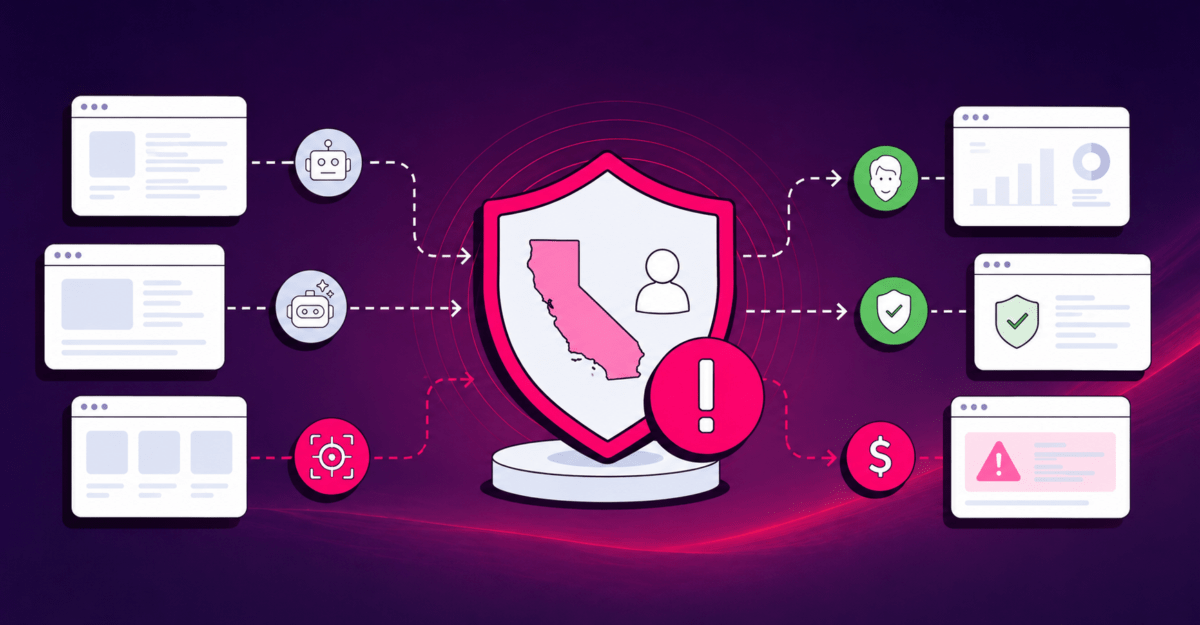
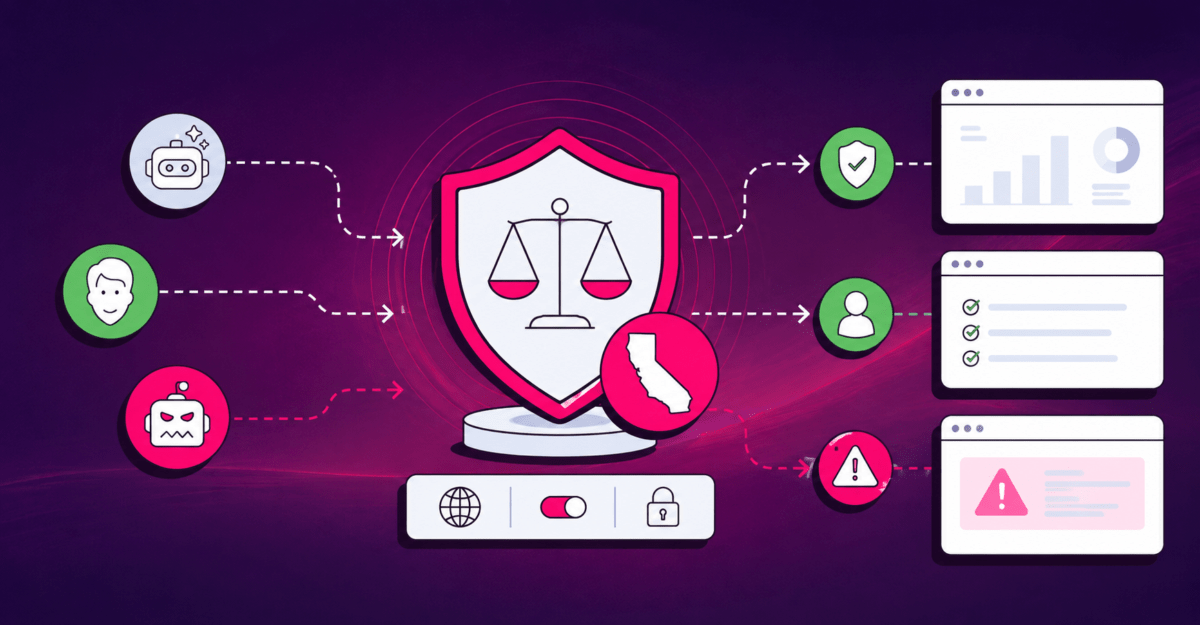
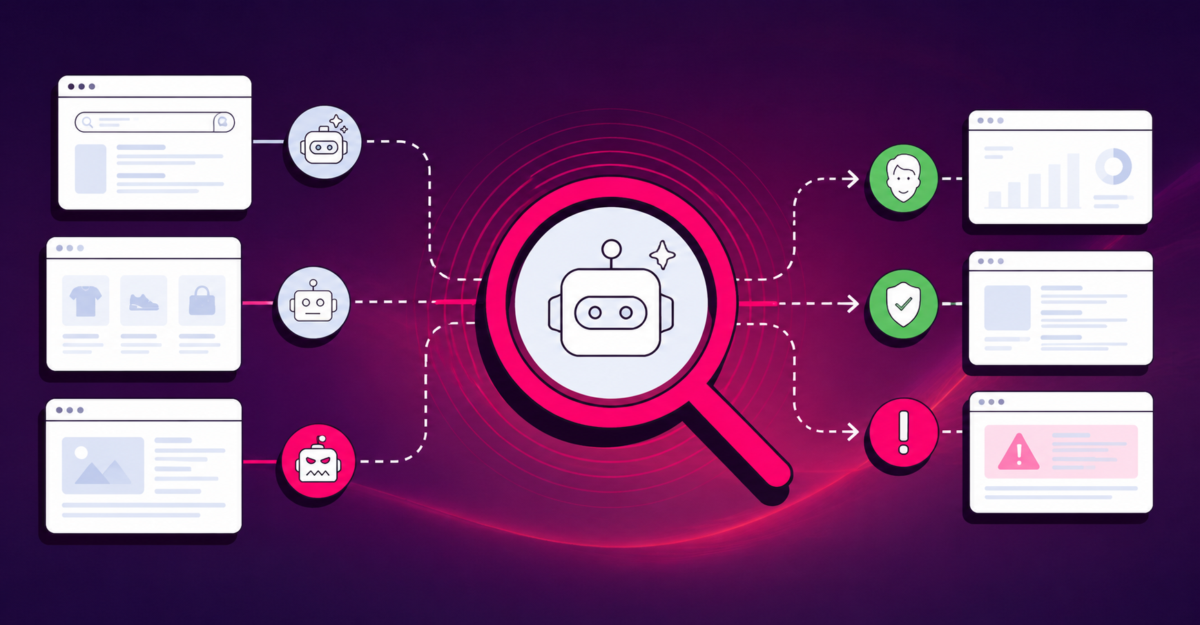
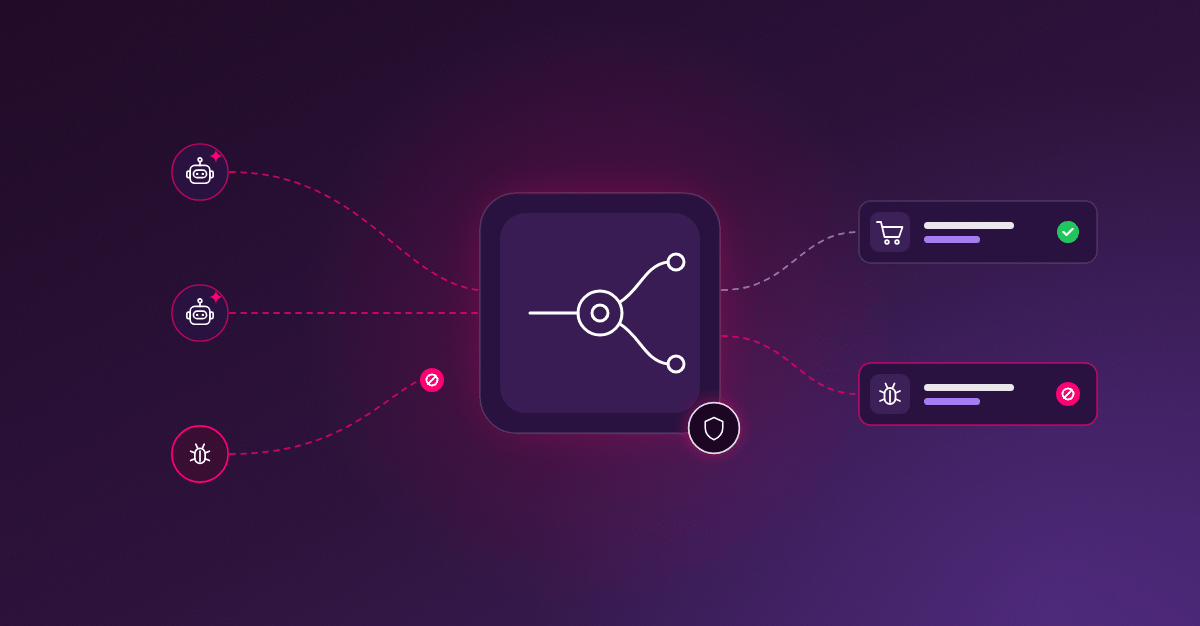
Most blocks trace back to the identity gap: Sites now see five types of visitors (humans, AI agents, crawlers, scrapers, and malicious bots), but many still can’t tell a legitimate agent from a scraper, so they block all of them.
-
Blocking agents turns away high-value customers: An agent working for a real person is ready to buy. Adobe found that AI retail visitors convert at a 60% higher rate than non-AI traffic. When a site blocks agents, they buy from a competitor instead.
-
What an agent claims to be is easy to fake: Any bot can claim to be a trusted agent, so blocking or allowing visitors based on how they label themselves stops honest agents and lets malicious ones through.
-
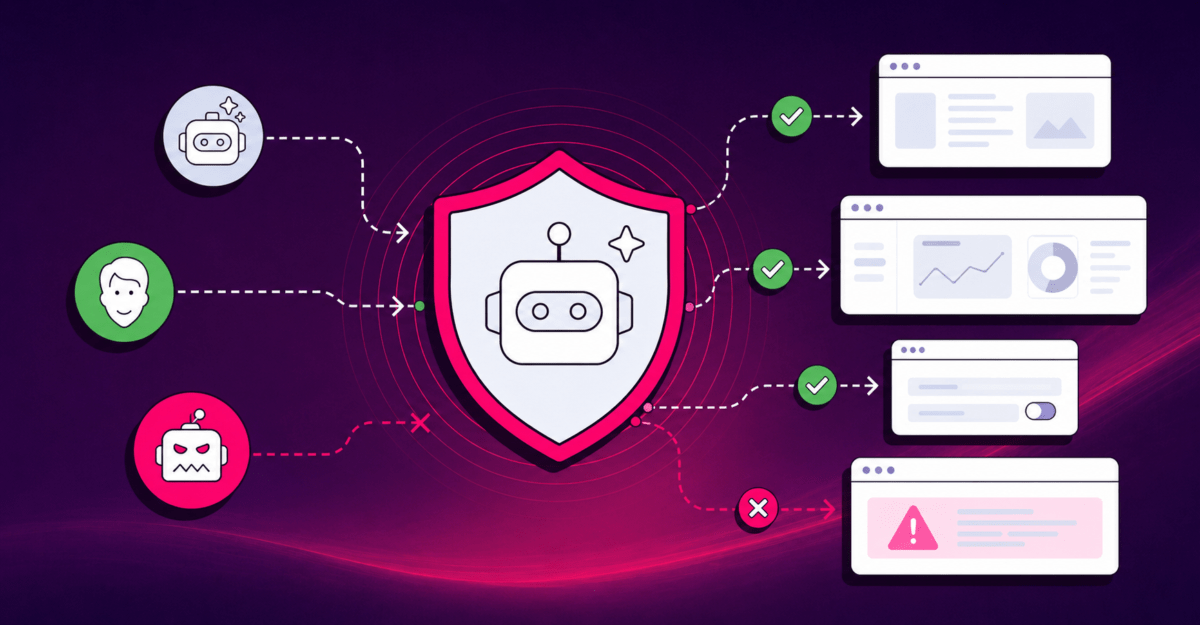
Entity, identity, and intent are the questions that matter: When a brand knows what each visitor is, who’s behind it, and what it’s trying to do, it can welcome good agents and stop bad ones in real time.
Which Companies Block AI Agents?
Every company blocking AI agents has its own worry, whether it’s losing sales, giving away data for free, being held financially responsible when something goes wrong, or having orders placed with no person checking them.
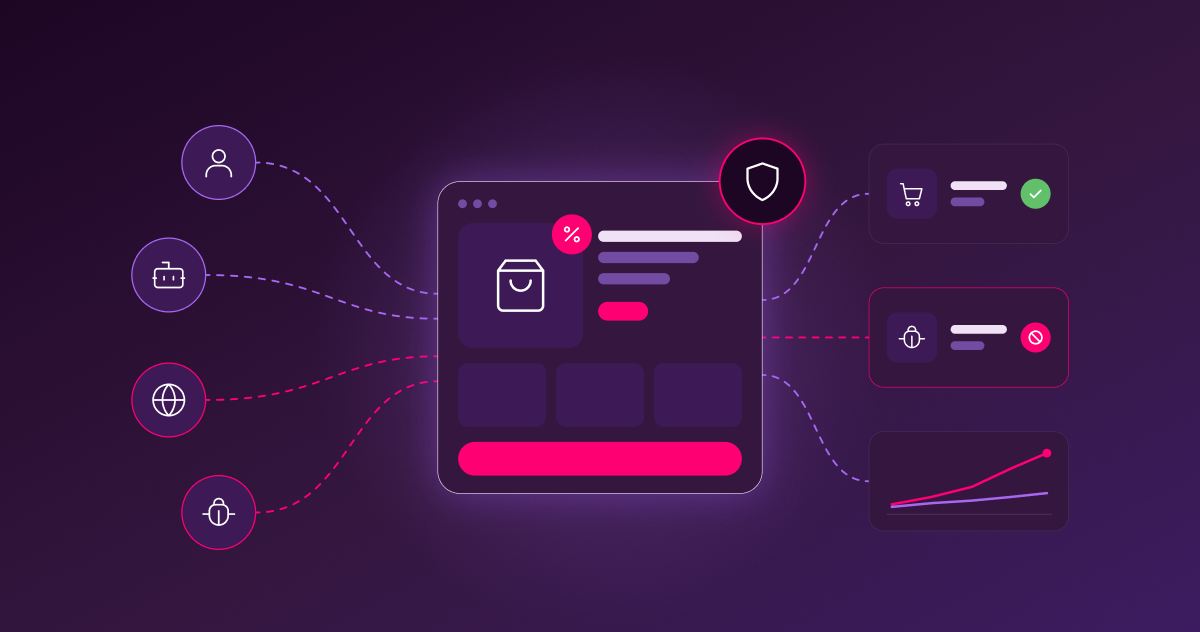
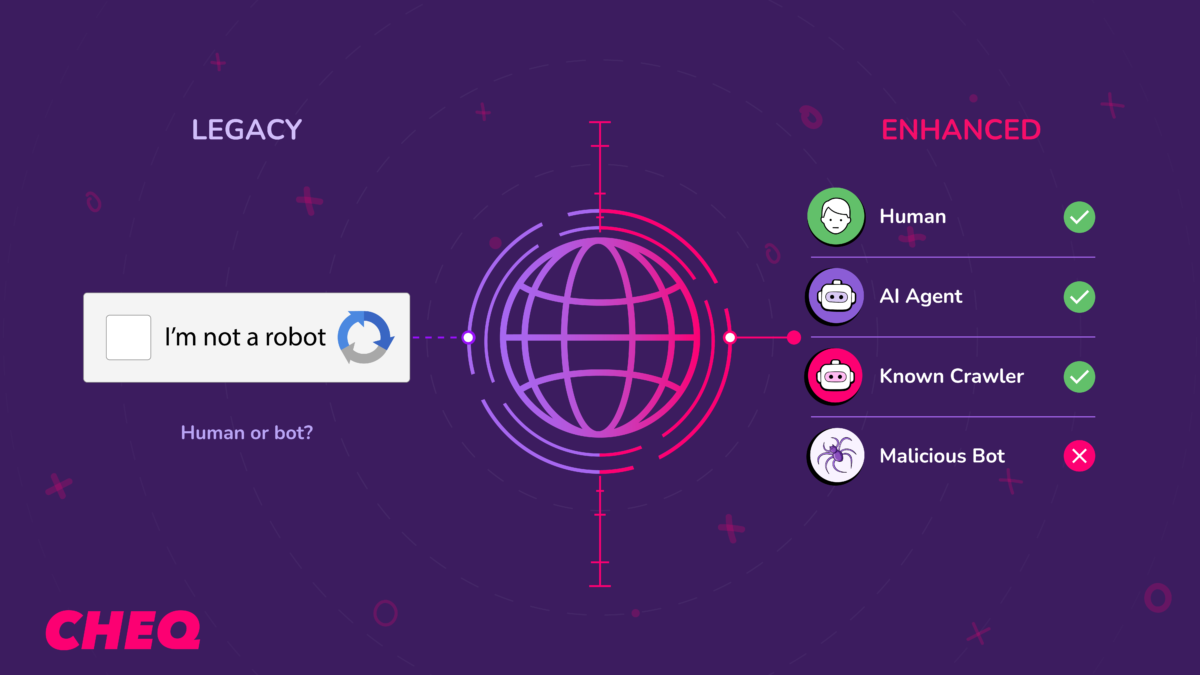
Underneath all of these fears is what we call the identity gap. Most traditional bot defenses only sorted traffic into bots and humans. But the rise of AI agents in the customer journey changed this, as sites now see at least five types of visitors, including humans, AI agents, crawlers, scrapers, and malicious bots. When a site can’t tell a legitimate agent, such as one trying to buy an airline ticket for a traveler, from a scraper using the same user agent, it blocks all of them.
On October 22, 2026, Axios reported that Morgan Stanley, Bank of America, Wells Fargo, and other major banks have detected unauthorized third-party AI agents inside customer accounts, often logged in with the customer’s own password. Some agents tried to take actions that appeared independent of user instructions, and banks are now restricting agent logins while they work out who’s liable when an agent gets it wrong.
Here are some of the biggest brands blocking AI agents:
- Amazon: Amazon sued Perplexity over its Comet browser, alleging the agent disguised automated traffic as a standard browser and accessed customer accounts without authorization. An appeals court reversed the injunction in August 2026, and the case continues. Since September 20, 2026, Amazon has also blocked Meta’s Muse agent, saying it didn’t identify itself as AI while browsing.
- Delta: Delta doesn’t allow third-party AI agents to book tickets on its site, similar to our story on WestJet blocking AI agents. Airlines have spent years steering travelers away from third-party sellers and toward booking directly, where the airline owns the relationship and makes money on seat upgrades, bags, loyalty sign-ups, and co-branded credit cards. An agent that books the cheapest fare and then leaves skips all of that.
- eBay: eBay’s User Agreement, which was updated in February 2026, bans “buy-for-me agents, LLM-driven bots, or any end-to-end flow that attempts to place orders without human review,” unless eBay has given prior permission. That exception leaves room for approved agent partners.
- Yelp: Yelp only lets in agents that pay for its data licensing program. Its reviews, ratings, and listings are the product, and an agent that reads them without paying returns nothing to the business.
- JPMorgan Chase: On the bank’s October 2026 earnings call, reported by CNBC, CEO Jamie Dimon said JPMorgan won’t let outside AI agents like Muse, Instinct, and OpenAI Dots act inside its systems, and he warned about “rogue agents.” Some third-party tools can view account data, but none can send money or pay bills.
- Charles Schwab: CEO Rick Wurster said Schwab blocks outside agents, including Meta’s Muse, from moving client money, telling Bloomberg TV, “We can’t control it, the client can’t control it, something could go wrong and who’s liable?” Instead, Schwab is building MCP servers so AI tools can check balances without moving funds, and it’s pointing clients to its own AI assistant, Charley.
Which Brands Allow AI Agents?
While some brands are blocking AI agents, others are betting on agentic commerce by building the checkouts, storefronts, and payment rails that agents need to complete a transaction for a real buyer. Opening the door is the first step, but the hard part for these brands and everyone who follows is telling the good and bad agents apart.
- Shopify: Shopify launched agentic storefronts in ChatGPT in March 2026, using the Shopify Catalog to distribute merchants’ product data to AI assistants while keeping the merchant’s own checkout and payment flows. Shopify also made Meta checkout the default for eligible stores, so Muse can complete purchases on them.
- Walmart: On October 21, 2026, Walmart launched Walmart Agent Gateway in beta. It gives AI agents a dedicated way to search and buy from Walmart and Sam’s Club without clicking through a website built for humans. Agent Profiles are coming next month. The first time a customer uses an agent through the Gateway, Walmart will create a profile for that agent in the customer’s account. Customers can approve every purchase or set a spending limit, and they can delete the profile at any time. Agents never see payment card details, and Walmart says agents that don’t follow its terms will be blocked.
- Target: Target launched its own app inside ChatGPT, allowing shoppers to build multi-item baskets, including fresh food, without leaving the conversation. Building its own app lets Target stay in the agent experience on its own terms.
- Mastercard: Mastercard introduced Agent Pay in 2025 to define how trusted AI agents take part in payments. In June 2026, it added Agent Pay for Machines, which gives each agent a credential and lets businesses set spending limits that are enforced automatically. As one partner quoted in the announcement put it, “Payment rails designed for humans cannot authorize an agent.”
- JPMorgan Payments: JPMorgan’s payments business has partnered with Mirakl to support AI agent checkout at enterprise scale. JPMorgan supplies tokenization so agents can transact safely, along with fraud protection. “As AI agents move from browsing to buying, safe, verified, and resilient payments become the backbone of commerce,” the company said. This is the same JPMorgan whose retail bank, Chase, keeps outside agents out of customer accounts.
The gray area between blocking and allowing
JPMorgan Payments, the company’s corporate payments division, is building payment rails so AI agents can buy things, while its own retail bank, Chase, won’t let those same agents through the front door. Across the banking industry, the story is similar. Banks are cutting off agent logins but still sharing limited data through approved channels, trying to stay open just enough without getting burned.
Walmart may be the clearest example of the middle path. Its new Agent Gateway invites approved agents to shop on Walmart and Sam’s Club, and upcoming Agent Profiles will give each agent its own spending limit set by the customer. Walmart compares this to adding an authorized user to a credit card, and it says agents that don’t follow its terms will be blocked. It’s a smart model, and it raises a practical question. The Gateway only works when an agent chooses to use it. Agents that browse the regular site can be hard to tell apart from human shoppers because they often don’t declare that they are an agent, so enforcing those terms still depends on knowing which visitor is which.
Call it caution, though most of it comes down to guesswork. When an agent logs in with a real customer’s password, the bank sees what looks like that customer. It can’t tell whether the customer sent the agent, whether the agent is doing what it was asked, or whether it’s an agent at all. So banks draw lines around channels and features, because they can’t draw them around the visitors themselves.
That’s the real gray area. Right now, most brands are setting agent policies based on limited information. The ones that can tell good agents from the ones that go rogue will be able to stop guessing and start making informed decisions to capture high-intent agentic shoppers.
Our Take: Blocking AI Agents Is a Visibility Problem Disguised as a Policy Decision
When a company says it’s blocking AI agents, it sounds like a strategy to prevent fraud. But most of the time, it means the company can’t tell which agents to trust. With most security tools still only sorting traffic into human or bot, an agent booking a flight for a loyal customer looks just like a scraper, so companies block the agent because it feels like the safest call.
Part of the problem is how many bot tools work. They run on block lists, so they look for whatever a company tells them to block and stop it. Anything that isn’t on the list can slip through, and anything that looks close enough gets caught. That’s how brands end up blocking good agents, letting bad ones in, and second-guessing their own data, since many tools don’t show how they reached a verdict in the first place.
We get why brands do it, but blocking everything automated isn’t the right answer for a few reasons:
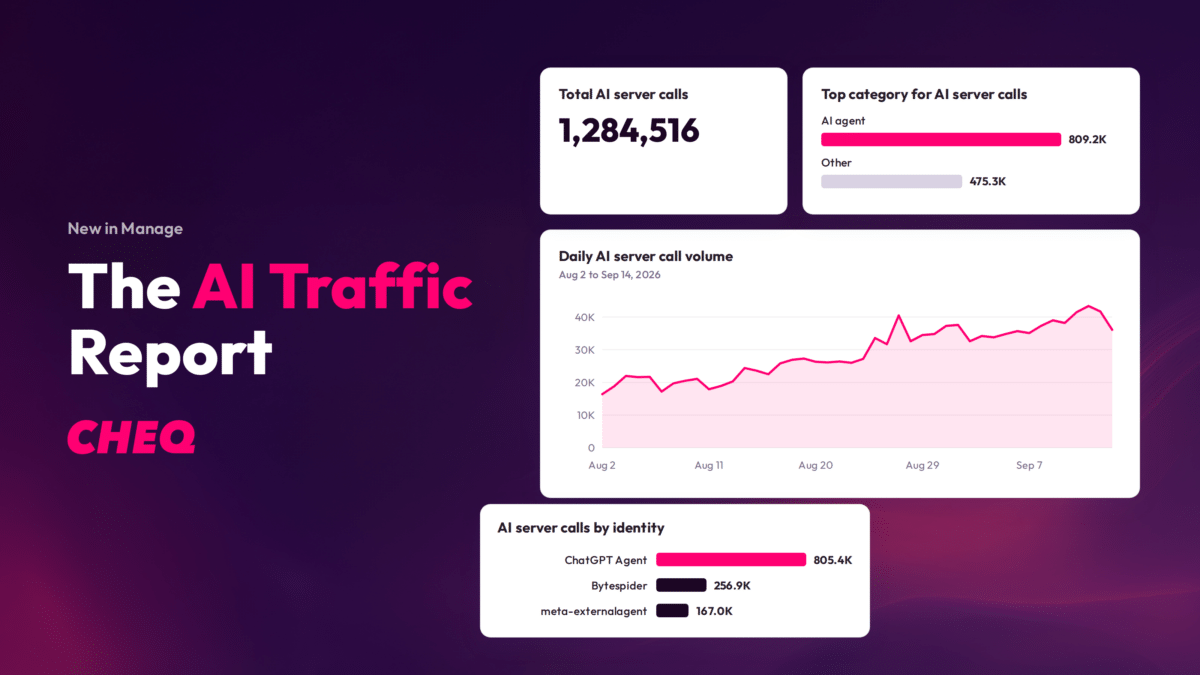
- The best customers get turned away: An agent acting for a real person has already done the research and is ready to buy. Adobe’s August 2026 AI Traffic Trends Report confirms this, finding AI retail visitors convert at a 60% higher rate and generate 53% more revenue per visit than non-AI traffic. Our own AI traffic conversion rate data backs this up too, with shoppers referred by AI assistants buying at 2.5 times the human rate on desktop.
- Those customers end up at a competitor: Say a traveler asks an agent to book the cheapest nonstop flight to Atlanta. If Delta blocks the agent, it doesn’t give up and send the traveler to Delta’s site. Instead, it books a seat on another airline or through a travel site, and Delta loses the fare, the seat upgrade, and maybe a loyalty member, too.
- Agent labels are easy to fake: Any scraper can claim to be ChatGPT, and agents like Perplexity’s Comet run inside a real browser, which is part of why Amazon accused it of passing as ordinary traffic. Blocking based on what a visitor says it is stops the honest agents and lets malicious activity walk right in.
Letting every agent in is risky too, since automated orders can bring fraud and chargebacks with them. So asking whether to allow AI agents gets you nowhere. The better question is which ones to trust, and that takes more than knowing a visitor is an agent.
Entity, Identity, and Intent: The Three Questions Every Site Needs to Answer
Knowing a visitor is an AI agent is only the first step, and on its own it doesn’t tell a brand much. The real answer comes from connecting three things at once: what the visitor is, whose it is, and what it’s there to do. A verified agent shopping for a real customer should get a very different response than an unknown agent testing stolen logins, even if both look like “an AI agent” at first glance. These are the questions brands need to answer to win the agentic era:
Entity
What is this visitor? Is it a person, a real AI agent like ChatGPT agent or Perplexity’s Comet, a search crawler, a scraper, or a malicious bot? A user agent string can claim anything, so the answer has to come from behavior and technical signals, not from what the visitor says about itself. Yelp’s worry about agents taking its data without paying is an entity problem. If Yelp can tell a licensed agent from a scraper pretending to be one, it can let the first in and keep the second out.
Identity
Who is behind it? Is this really a customer’s agent, acting with their permission, or something using their name or login to get in? A legitimate agent works for a real person or business. Knowing who that is, and whether they actually approved the task, is what companies like banks care about most. What banks like Schwab and JPMorgan Chase fear most is an agent logging in with a password and moving money for someone who never asked it to. When agent identity is clear, a site can tie each agent to an accountable human and spot malicious AI agents.
Intent
What is it trying to do? The same agent can compare prices one minute and try to run a stolen card the next. Intent shows whether a visit looks like a shopper buying something, a competitor pulling every price on the site, or a fraudster testing logins. eBay’s concern about orders placed with no human review is really a question of intent. A purchase that matches what a real customer would do can go through, and one that doesn’t can be flagged for review.
How the three questions map to brands’ fears
This is the problem CHEQ was built to solve. CHEQ Analytics analyzes every visitor across all five traffic types (humans, AI agents, crawlers, scrapers, and malicious bots) to work out what it is, who’s behind it, and what it’s trying to do, so brands can welcome the agents that bring them customers and stop the ones that don’t.
| Brands’ Fear | The Question That Answers It |
|---|---|
| An agent takes our data without paying | Entity |
| A bot poses as a trusted agent or a real customer to get into accounts it shouldn’t | Identity |
| An agent places fraudulent or unreviewed orders | Intent |
| We can’t tell good agents from bad ones | All three |
Wrapping Up: Stop Guessing Which AI Agents to Trust
Delta, Amazon, Yelp, and now much of the U.S. banking sector are shutting AI agents out. Meanwhile, Shopify, Walmart, Mastercard, and JPMorgan’s own payments business are building ways for agents to buy and pay. In most cases, the blocks come from the same gap. Brands can’t tell a legitimate agent working for a real customer from a scraper or fraud bot pretending to be one, so they turn everyone away, including the ready-to-buy customers agents bring with them.
CHEQ closes that gap. We analyze every visitor across all five traffic types to understand each one’s entity, identity, and intent in real time. This way, brands can confidently welcome the agents that drive revenue and stop the ones that put them at risk. The agentic web is already here, and the brands that can see clearly will be the ones that grow with it. Book a demo today or get a free website health scan to see how much invalid traffic is on your site.

Author
Spencer Bossi-Johnson
As Senior Content Marketing Manager at CHEQ, Spencer helps brands make sense of a web where humans and AI agents share the customer journey. With eight years in SEO and GEO content strategy, he knows how to write for people and the machines that recommend content to them.