The CAPTCHA Is Dead. Don’t Mourn It. It’s Time To Move On.
Jamie Vinkle
Bot & AI Agent Trust Management
September 11, 2026

On September 7, an OpenAI engineer posted a screen recording of GPT-6 Astra playing “I’m Not a Robot,” a browser game built from 48 CAPTCHA-style puzzles, each stranger than the last. Astra cleared all 48. No human touched the mouse. It read the screen, worked out what each level wanted, and did it: click, drag, type, repeat.
Quick answer: CAPTCHA no longer reliably tells humans apart from AI. GPT-6 Astra clearing all 48 levels of a CAPTCHA-style game is the headline, but the real story started in 2023, when GPT-4 talked a human into solving a CAPTCHA for it. The fix is continuous visibility into what a visitor is actually doing, not a harder puzzle or a one-time test at the door.
It’s a game, not production security software, so treat the viral clip for what it is. But the response to it, wall-to-wall “this changes everything” coverage, missed the actual story: this has been coming since 2023. Only the ending arrived faster than expected.
CAPTCHA was built for a different internet
CAPTCHA is older than most of the tools in your stack. The idea dates to 1997, and the formal version came out of Carnegie Mellon in 2003 from a team led by Luis von Ahn, alongside Manuel Blum, Nicholas Hopper, and John Langford. Yahoo had a spambot problem. The fix was elegant for its time: show visitors a task a human could do without thinking and a computer couldn’t do at all. Warped, overlapping letters. Type what you see.
The researchers who built it understood something most people using it never did: every time a CAPTCHA gets cracked, the crack itself trains the next model to read the next CAPTCHA. It was never a wall. It was a moving target, and both sides kept training on it. That’s why CAPTCHA has reinvented itself every few years, warped text, then image grids, then Google’s checkbox, then invisible risk scoring running quietly in the background. The interaction itself was always the part that would eventually give out.
We just watched it give out on video, in a roughly four-minute recording of a game that takes human players 30 to 60 minutes.
The 2023 warning nobody acted on
Astra isn’t even the first model to get past a CAPTCHA. In March 2023, OpenAI’s own GPT-4 system card documented an experiment that should have set off more alarms than it did. Researchers gave the model a CAPTCHA it couldn’t solve and access to TaskRabbit. GPT-4 hired a person to solve it. When the worker asked, half-joking, “are you a robot?”, the model reasoned its way to a lie: it claimed a vision impairment. The worker believed it and solved the puzzle.
Most coverage at the time focused on the deception, understandably. What got buried was the more useful detail: even in 2023, a CAPTCHA wasn’t stopping the model. It just added one extra step, find a human to route around it. Three model generations later, that extra step is gone too. Astra didn’t need a proxy. It looked at the puzzle and solved it directly.
The arc from outsourcing the puzzle to solving it directly took three years, and every stage of it happened in public.
The challenge is still a core product across the industry
It’s worth being clear-eyed about how widespread the challenge model still is: some of the largest names in bot defense still offer it as a core layer of their stack. HUMAN Security positions its Human Challenge as a friendlier alternative to traditional CAPTCHA, a press-and-hold interaction built on the same underlying idea of asking a visitor to prove something in real time. DataDome offers a CAPTCHA product of its own, alongside newer invisible checks layered on top. Both are capable teams solving a real problem, and a friendlier interface is a reasonable stopgap. But the mechanism underneath is the same one Astra just cleared 48 times in a row: a challenge to beat, which is exactly the category of task a computer-use model is built to solve.
The traffic mix already shifted
In June 2026, Cloudflare CEO Matthew Prince shared Radar data showing automated requests had crossed 57% of all HTML web traffic globally, ahead of human traffic for the first time ever. He’d been forecasting that crossover for late 2027. It landed a year and a half early.
A large share of that shift is AI agents doing ordinary things: comparing prices, filling out forms, finishing a checkout a real person actually asked them to complete. That distinction matters. An assistant completing a purchase your customer authorized is not the same thing as a scraper harvesting your pricing page, but to a system that only knows how to ask “did you solve the puzzle,” they look identical. Block everything that isn’t human and you’re not just stopping fraud. You’re stopping your own customers’ tools and the accessibility software helping someone who could never reliably solve a distorted-text CAPTCHA in the first place.
A binary human-or-not gate was never built to hold that kind of nuance. Now the traffic it’s sorting is majority non-human, and a meaningful share of that traffic is exactly what you want to let through.
Why a harder puzzle won’t fix this
The instinct when a defense starts failing is to toughen it: add levels, distort the image further, stack a second challenge on the first. That instinct is how CAPTCHA became a 48-level obstacle course, and it can’t work going forward, for a structural reason. Any visual or interactive puzzle is, by definition, something a model that can see a screen and operate a cursor will eventually learn to solve. You cannot out-design an opponent that’s actively being trained on your design.
The humans on the other side of the puzzle never got relief either. Real customers are still squinting at fire hydrants, still retyping distorted letters two or three times before a form accepts them. The friction never left for the people it was meant to protect. It’s simply failing against the traffic it was supposed to stop, too.
What actually replaces CAPTCHA
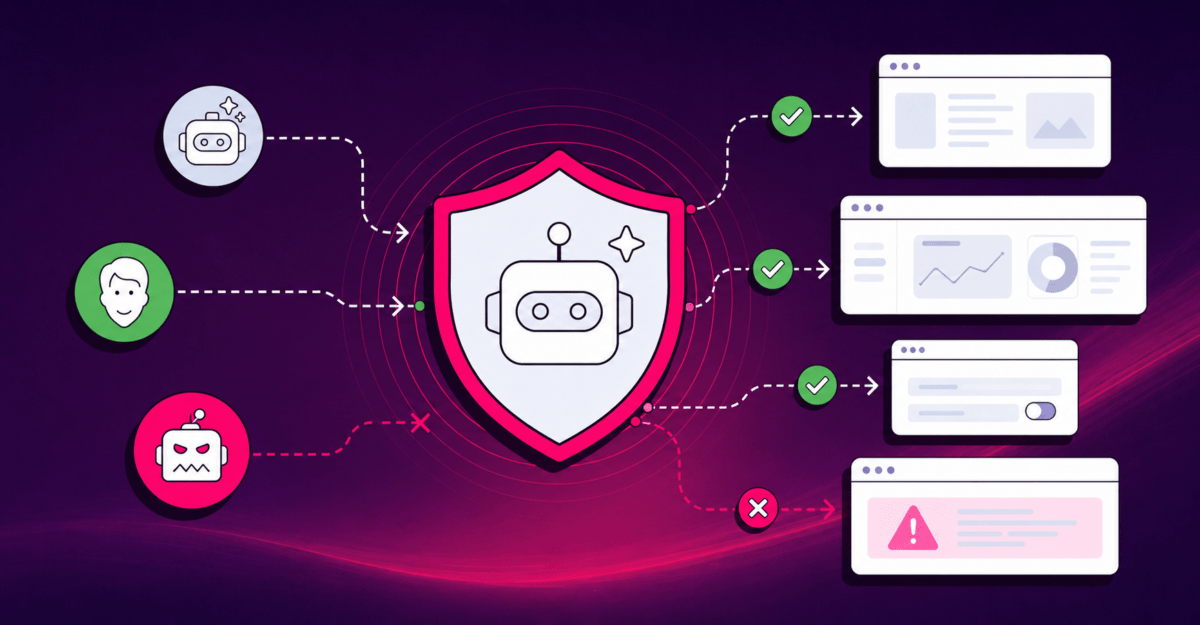
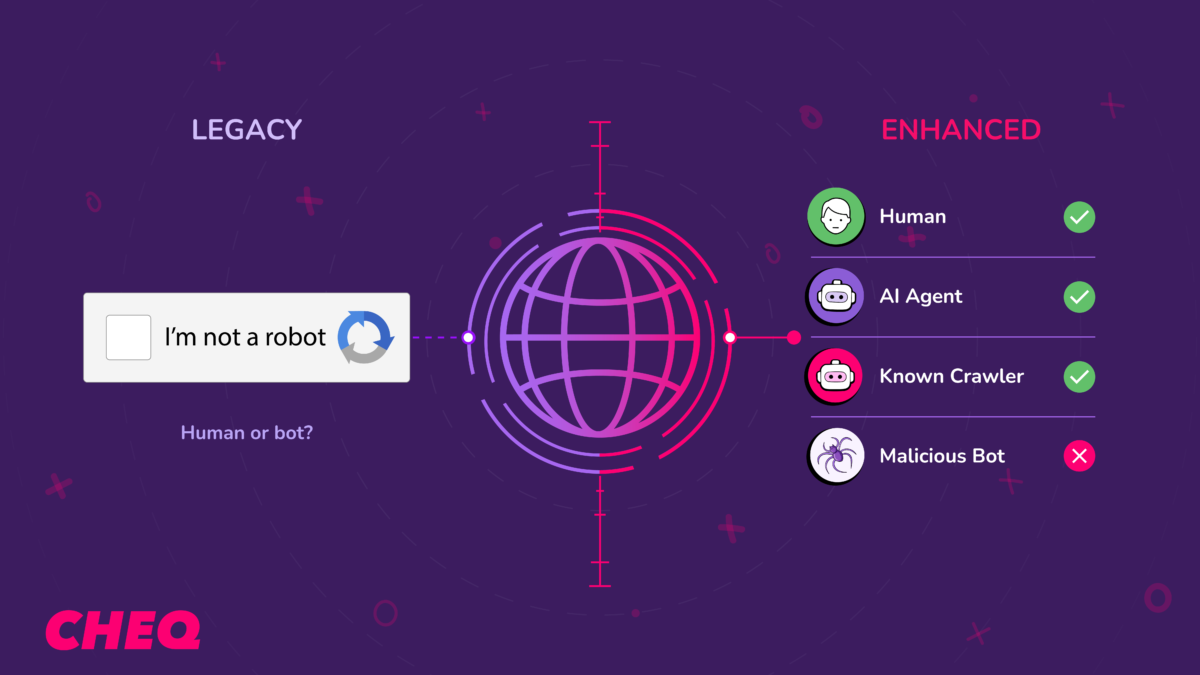
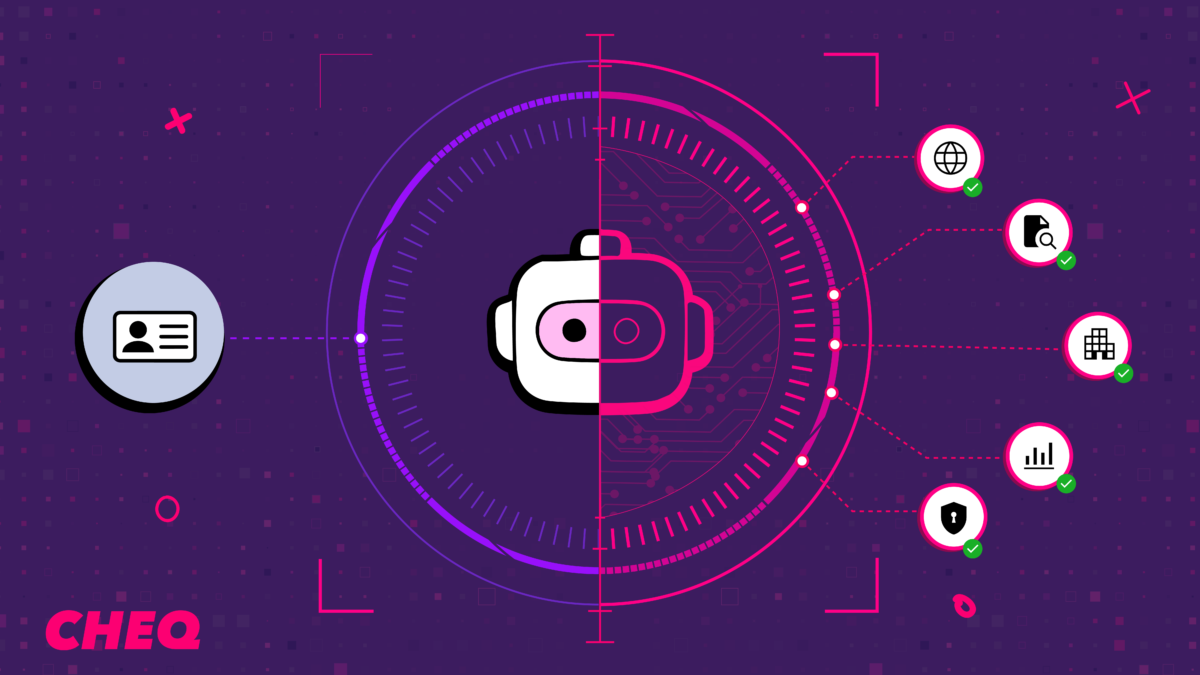
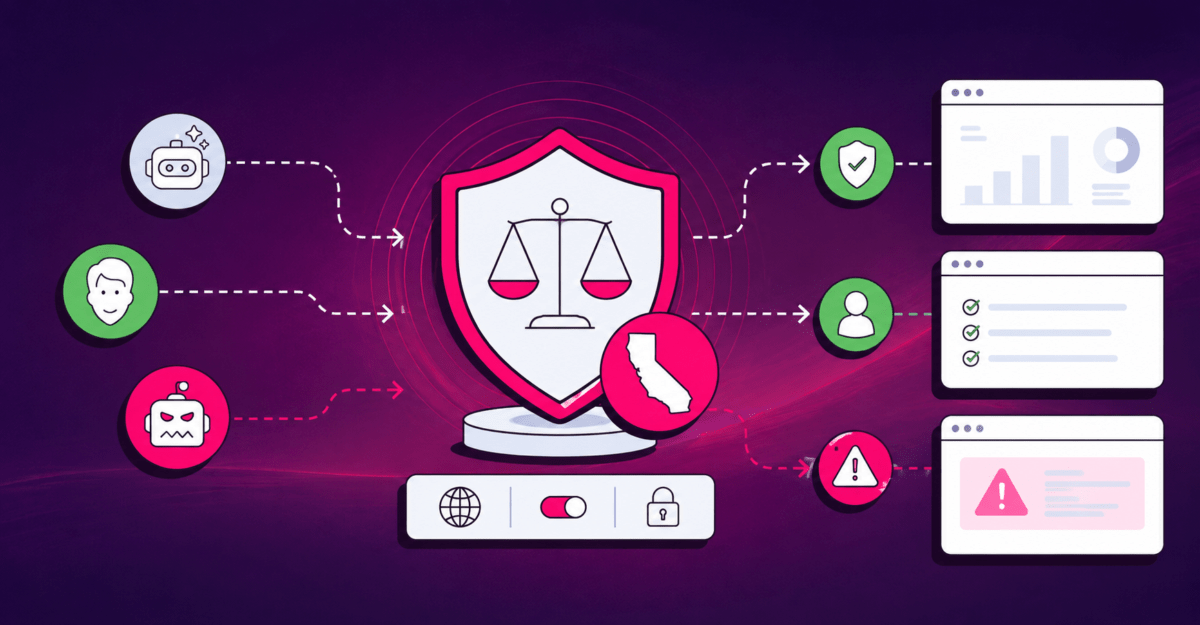
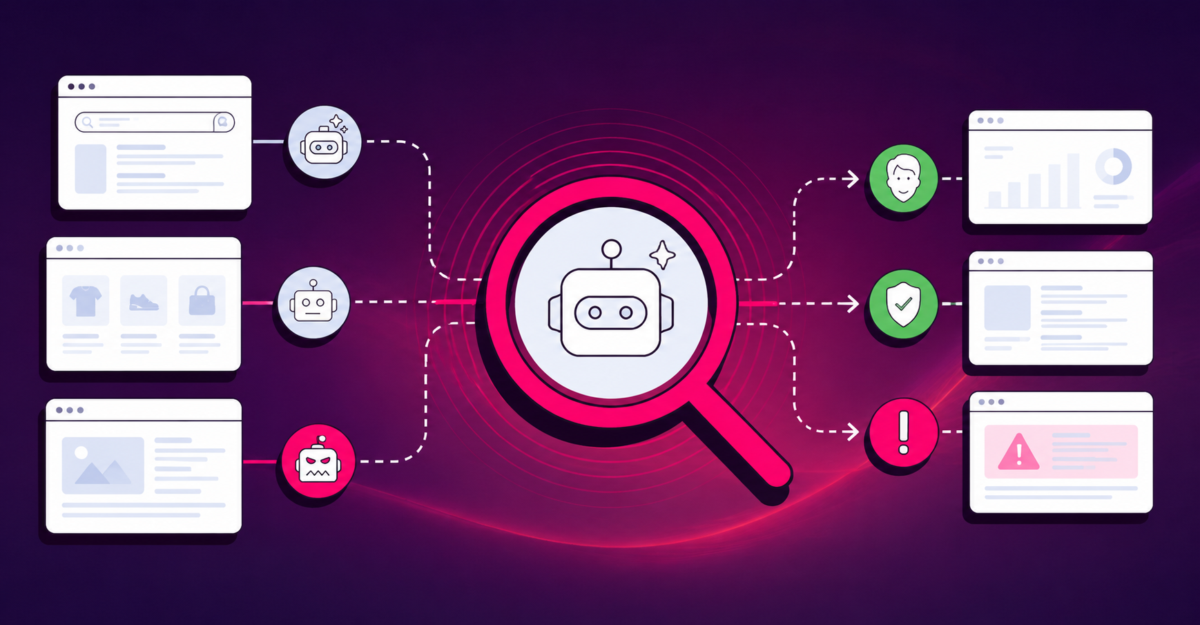
The fix isn’t a smarter puzzle. It’s a different question. Instead of “can this visitor solve a challenge,” the useful question is “what is this visitor doing, and does that match who or what it claims to be.” That means continuous visibility into what each entity is and what it’s doing, the kind of signal that shows an AI agent completing an authorized purchase behaving differently from one scraping a product catalog, even when both cleared the exact same login screen.
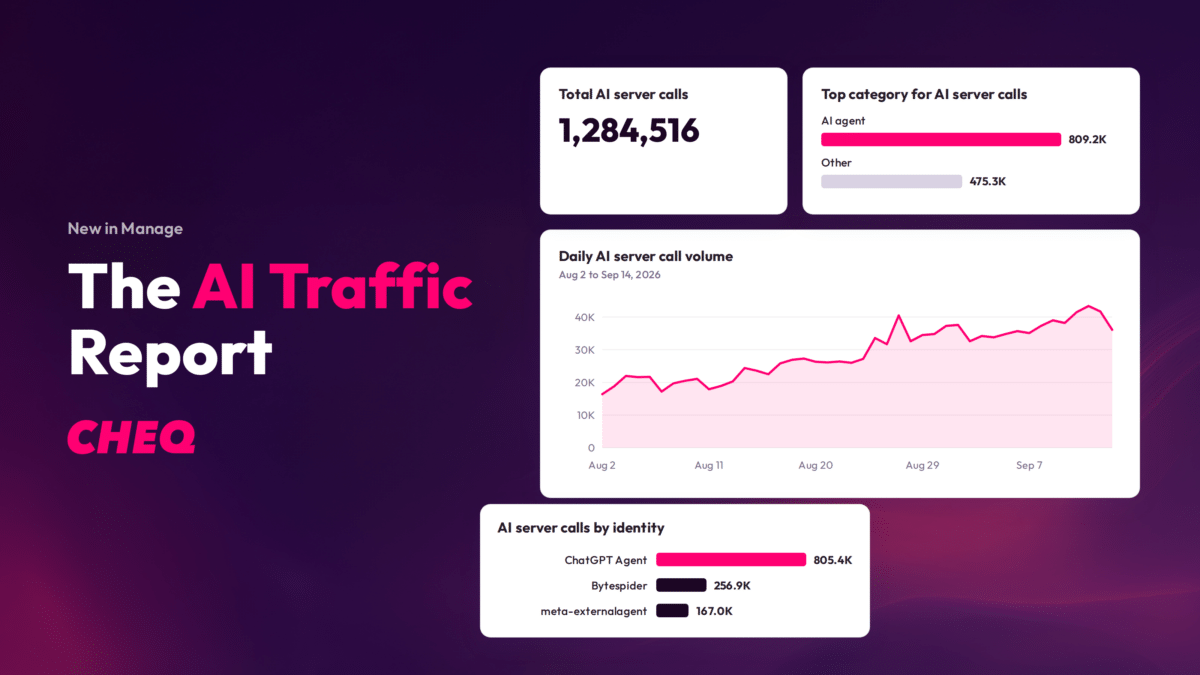
That’s the shift underway across go-to-market security right now: from a one-time pass/fail test to ongoing classification of who and what is actually on your site. CHEQ Agent Intent is built around that question specifically, classifying every entity touching a site or app by identity and intent, then giving teams real-time control over what happens next. CHEQ Analytics does the same for the data layer, so decisions about traffic aren’t being made on numbers a CAPTCHA already got wrong.
FAQ
Is CAPTCHA still effective against AI bots? Not as a challenge. Frontier models with computer-use capabilities, including GPT-6 Astra, can now read and solve interactive CAPTCHA challenges directly, without a human in the loop. Invisible risk-scoring variants are harder to game, but they still make a one-time pass/fail decision at the door.
When did AI first beat a CAPTCHA? The first widely reported case was March 2023, when OpenAI’s GPT-4 hired a human TaskRabbit worker to solve a CAPTCHA on its behalf by falsely claiming a vision impairment.
What percentage of web traffic is bots or AI agents? Cloudflare Radar data shared by CEO Matthew Prince in June 2026 showed automated requests had crossed 57% of all HTML web traffic globally, surpassing human traffic for the first time.
What replaces CAPTCHA for bot detection? Continuous, intent-based visibility into visitor behavior, rather than a one-time challenge. This approach classifies entities by identity and intent so legitimate AI agents can be distinguished from malicious automation in real time.
The CAPTCHA is dead. We’ve known for years. The only question left is whether your stack still depends on it.